
Every so often, I have one of those evenings where I just need to bring a little burst of sunshine into my kitchen. That’s when I turn to my favorite recipe: Pasta Primavera, a fresh veggie bliss that effortlessly combines bright colors and wholesome goodness. This dish is an absolute game-changer for anyone craving a quick, healthy dinner without sacrificing flavor. One of the best perks? It’s incredibly customizable—feel free to toss in whatever seasonal vegetables you have on hand. Plus, with options for gluten-free pasta, everyone can join in on the fun! Are you ready to make your dinner table bloom with deliciousness? Let’s dive into this vibrant recipe that’s perfect any night of the week.
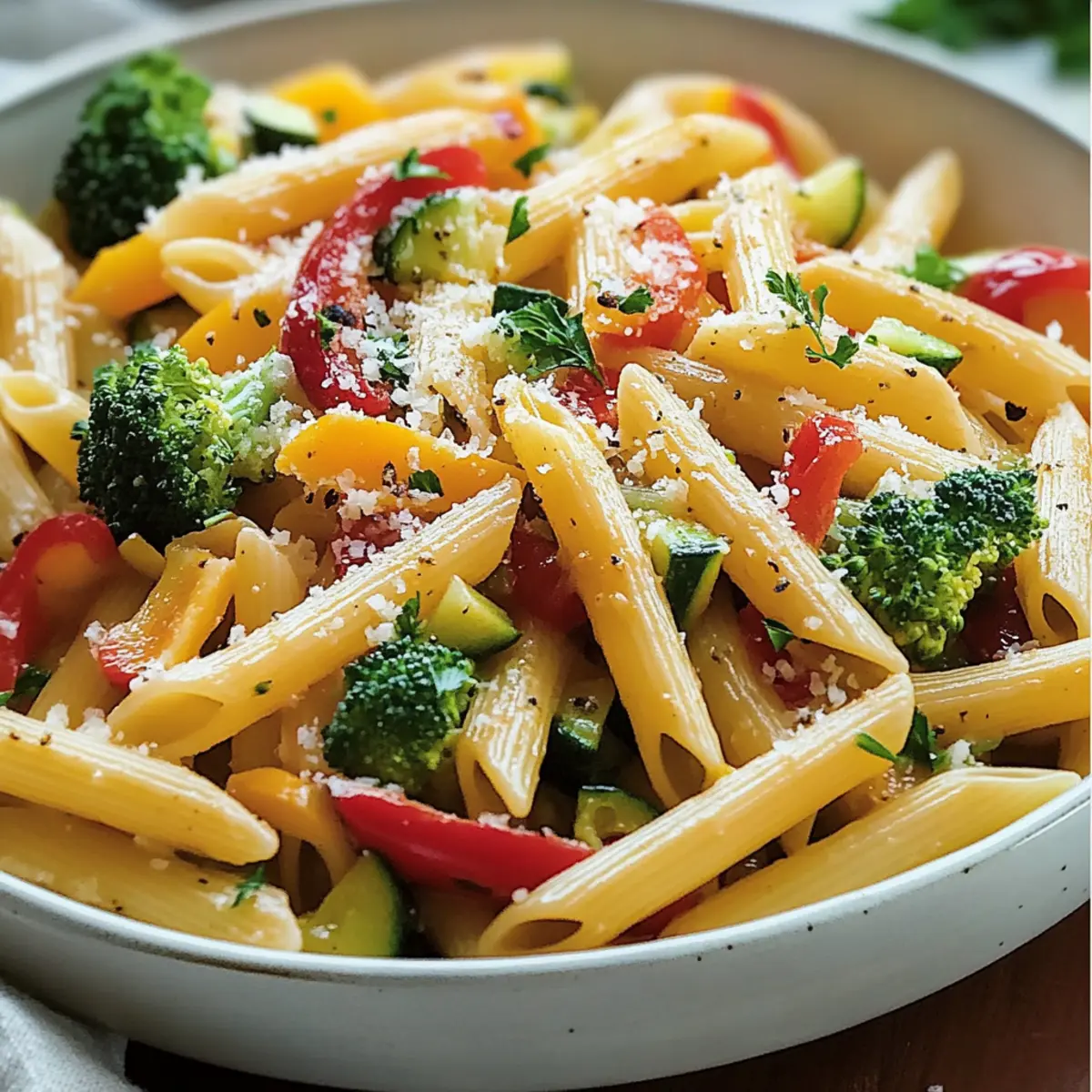
What makes Pasta Primavera so special?
Freshness: This vibrant dish is a celebration of seasonal vegetables, ensuring each bite is packed with nutrition and flavor.
Quick Prep: With just a few steps, you can whip up a wholesome meal in under 30 minutes—perfect for busy weeknights!
Customizable: Not only can you adapt it with your favorite veggies, but you can also easily tweak ingredients for gluten-free or dairy-free options. If you’re looking for more delicious ideas, check out my Bacon Cheeseburger Pasta for a hearty twist or a light Crock Pot Pasta for those slow-cooked flavors.
Crowd-Pleaser: Whether you’re feeding family or hosting friends, this dish always impresses with its colorful presentation and mouthwatering aroma.
Made for Sharing: Enjoy with a side of garlic bread or a mixed green salad to elevate this delightful meal and make it a complete experience!
Pasta Primavera Ingredients
For the Pasta
• Penne Pasta – Base of the dish; substitute with gluten-free or chickpea pasta for dietary needs.
For the Veggies
• Red Onion – Provides sweetness; yellow onions or shallots are great alternatives.
• Carrot – Adds sweetness and color; parsnip can be a unique swap.
• Broccoli Florets – Offers crunch and nutrition; asparagus or green beans can be used instead.
• Red Bell Pepper – Brings sweetness and visual appeal; green, yellow, or orange peppers are suitable substitutes.
• Yellow Squash & Zucchini – Adds freshness and vibrancy; eggplant or other seasonal squashes make good replacements.
• Garlic – Essential for flavor; increase the amount for a bolder kick.
• Grape Tomatoes – Provides juicy sweetness; cherry or sun-dried tomatoes are viable alternatives.
For the Seasoning
• Dried Italian Seasoning – Infuses the dish with herby flavors; swap with fresh herbs like basil or oregano for enhanced freshness.
• Lemon Juice – Adds acidity and brightness; lime juice can be a substitute.
• Parmesan Cheese – Contributes rich flavor; use nutritional yeast for a dairy-free option.
• Fresh Parsley – Used for garnish and added freshness; basil or cilantro work well too.
For Cooking
• Olive Oil – For sautéing; can be replaced with another cooking oil.
• Salt – To taste.
• Red Pepper Flakes (optional) – For a hint of heat; sprinkle before serving.
Creating this Pasta Primavera: Fresh Veggie Bliss is a simple way to embrace the deliciousness of home cooking!
Step‑by‑Step Instructions for Pasta Primavera: Fresh Veggie Bliss
Step 1: Boil the Pasta
Bring a large pot of salted water to a rolling boil over high heat. Add penne pasta and cook for 10-12 minutes, or until al dente. Make sure to stir occasionally to prevent sticking. Once cooked, reserve ½ cup of the starchy pasta water, then drain the rest in a colander. This will be the base of your Pasta Primavera.
Step 2: Heat the Oil
In a deep skillet or large sauté pan, heat 2 tablespoons of olive oil over medium-high heat. Allow the oil to shimmer, signaling it’s hot enough for sautéing. This is an important step to ensure the vegetables sear nicely, adding a lovely flavor to your Pasta Primavera.
Step 3: Sauté the Onions and Carrots
Add diced red onion and sliced carrots to the hot skillet, sautéing for about 2 minutes until fragrant and the onions have slightly softened. Keep stirring continuously to allow even cooking. The vegetables should start to glisten, indicating they are cooking well and the base for your dish is coming together beautifully.
Step 4: Add Colorful Veggies
Toss in the broccoli florets and sliced red bell pepper into the skillet. Sauté for another 2 minutes, allowing the vegetables to turn vibrant and tender-crisp. You’ll know they are ready when they become brightly colored and slightly softened but still retain a bit of their crunch, a hallmark of a good Pasta Primavera.
Step 5: Incorporate Zucchini and Squash
Stir in the yellow squash and zucchini, continuing to sauté for an additional 2-3 minutes until just starting to soften. The colors should be bright and inviting; you want them cooked but still crisp. This mix of veggies not only brings freshness but also creates a stunning base for the Pasta Primavera.
Step 6: Add Garlic and Tomatoes
Add minced garlic, halved grape tomatoes, and dried Italian seasoning to the skillet. Sauté for another 2 minutes, watching closely as the garlic turns golden and fragrant. The tomatoes should begin to burst, releasing their natural sweetness, enhancing the flavor profile of your Pasta Primavera deliciously.
Step 7: Combine Pasta and Veggies
Carefully add the drained penne pasta to the skillet, mixing well with the sautéed vegetables. Toss everything together until the pasta is evenly coated in the flavors and the colorful veggie mix. The combination should look vibrant and inviting, setting the stage for a delightful meal.
Step 8: Adjust Flavors
Drizzle fresh lemon juice over the pasta mixture and season with salt to taste. To create the perfect consistency for the sauce, slowly add the reserved pasta water, a little at a time, stirring until it reaches your desired thickness. This step will ensure your Pasta Primavera is not only flavorful but also has a beautiful texture.
Step 9: Finish with Cheese and Herbs
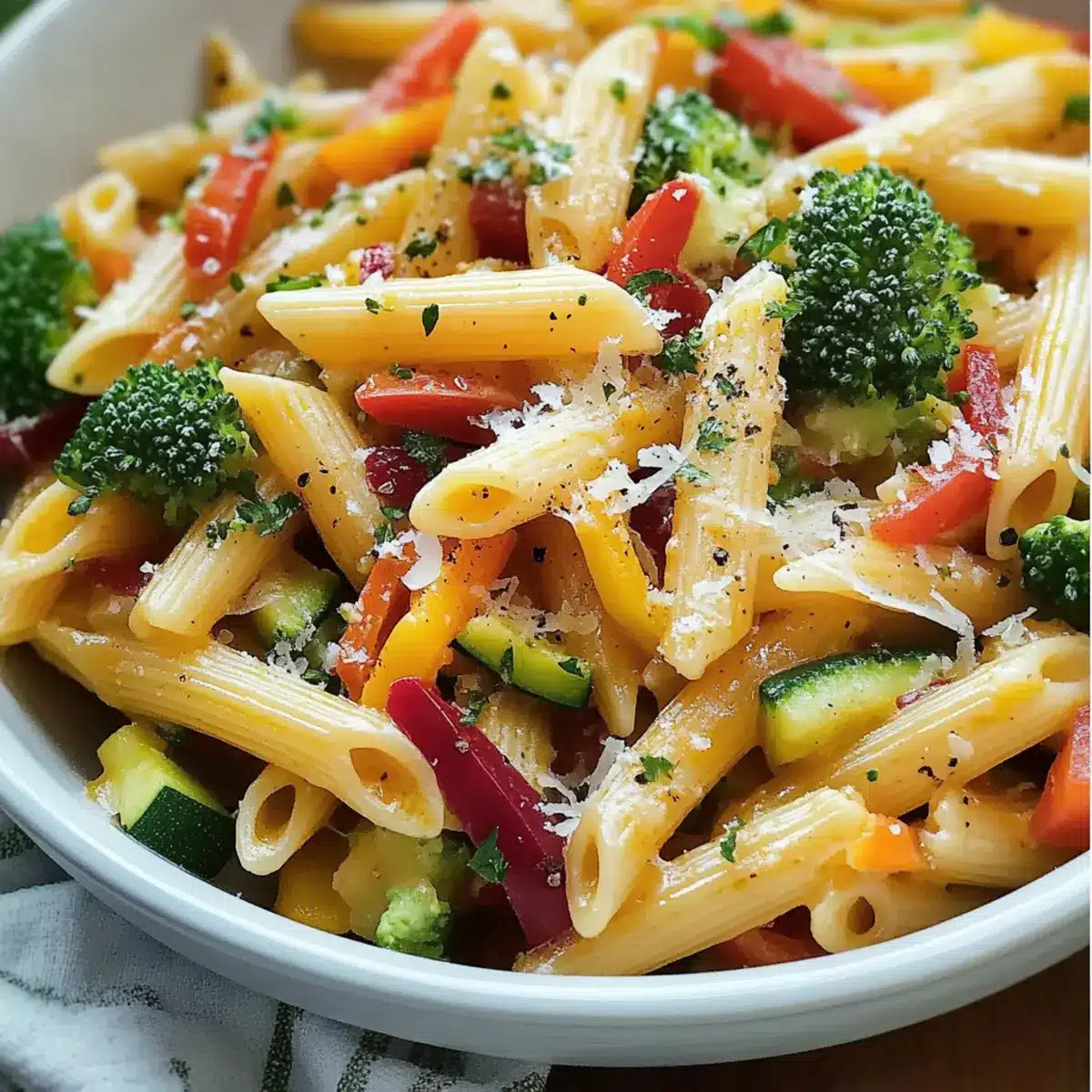
Last but not least, sprinkle grated Parmesan cheese and chopped fresh parsley over the dish, tossing lightly to combine. The cheese will melt into the warm pasta while adding depth to your Pasta Primavera. The herbs provide a lovely freshness, making it all the more delightful and visually appealing.
Storage Tips for Pasta Primavera
Fridge: Store leftover Pasta Primavera in an airtight container for up to 3 days. Make sure to cool it to room temperature before sealing to maintain freshness.
Freezer: You can freeze Pasta Primavera for up to 2 months. Just portion it in freezer-safe containers, leaving some space for expansion.
Reheating: When ready to enjoy leftovers, reheat it on the stovetop over low heat, adding a splash of olive oil or reserved pasta water to restore the creamy texture.
Keep it Fresh: To keep your Pasta Primavera crispy, store the vegetables and pasta separately if possible, combining them just before serving.
Pasta Primavera: Fresh Veggie Bliss Ideas
Every great dish invites creativity and personalization! Feel free to explore these delicious twists to make your Pasta Primavera truly yours.
- Gluten-Free: Substitute penne with gluten-free pasta or chickpea pasta for a delightful adaptation.
- Extra Protein: Add grilled chicken or shrimp to transform your vegetarian dish into a hearty meal. Just grill them alongside the veggies for a delicious one-pan experience.
- Herb Explosion: Fresh herbs like basil or oregano can elevate the dish’s aroma and taste. Swap dried Italian seasoning for fresh to bring an aromatic burst.
- Extra Veggie Power: Incorporate any vegetables you have on hand, such as mushrooms, spinach, or cauliflower, to surprise your palate with new textures and flavors.
- Spicy Kick: Sprinkle in red pepper flakes or fresh jalapeños for a zesty heat that adds extra excitement to each bite.
- Creamy Twist: Stir in a dollop of ricotta or cream cheese at the end for a creamy, indulgent counterbalance to the freshness.
- Roasted Flavor: Roast the veggies in the oven with a drizzle of olive oil for a caramelized flavor that takes your Primavera to the next level.
- Vegan Delight: Eliminate the Parmesan and use nutritional yeast to maintain a cheesy flavor without dairy, making this dish suitable for vegan diets.
Don’t forget, if you’re looking to balance flavors, you might want to check out my Bruschetta Pasta Salad for a fresh summer alternative or a hearty Crock Pot Pasta if you’re in the mood for convenience!
What to Serve with Pasta Primavera: Fresh Veggie Bliss
Vibrant flavors deserve a vibrant table! Complement your colorful Pasta Primavera with these delightful pairings that enhance your dining experience.
-
Garlic Bread: Toasty and buttery, this classic pairing adds a comforting crunch that perfectly contrasts the soft pasta and veggies.
-
Mixed Green Salad: A refreshing mix of greens drizzled with a light vinaigrette balances the dish, bringing a burst of brightness to your meal.
-
Grilled Chicken: Juicy, smoky chicken elevates the dish with added protein while seamlessly blending with the fresh flavors of the primavera.
-
Crusty Ciabatta: This hearty bread is perfect for soaking up any leftover sauce, ensuring that no delicious drop goes to waste.
-
Lemonade Spritz: A sparkling lemonade offers a bright, bubbly refreshment that cuts through the richness of the dish, leaving your palate excited.
-
Roasted Vegetables: Complement your dish with a side of balsamic-roasted veggies, adding more layers of flavor and nutrition to your table.
-
Herbed Quinoa: Light yet satisfying, this nutty grain serves as a wholesome base that pairs beautifully with the vibrant pasta dish.
-
Tiramisu: For a sweet ending, this classic Italian dessert is a delightful finish, providing a rich contrast to the lightness of the primavera.
Make Ahead Options
Pasta Primavera is a fantastic dish for those looking to save time during busy weeknights! You can chop your vegetables—like bell peppers, zucchini, and carrots—up to 3 days in advance. Store them in an airtight container in the refrigerator to maintain their crispness and freshness. It’s also helpful to cook the penne pasta a day ahead; just undercook it slightly to prevent it from becoming mushy upon reheating. When you’re ready to enjoy your meal, simply sauté the prepped veggies, add the pasta along with garlic and seasoning, and finish with a splash of lemon juice and grated Parmesan. This way, you’ll savor the vibrant flavors of Pasta Primavera without the last-minute rush!
Expert Tips for Perfect Pasta Primavera
- Prep Ahead: Chop all your vegetables in advance to streamline your cooking process, making weeknight meals a breeze.
- Cook Smart: Sauté veggies based on their thickness. For example, start with harder vegetables like carrots and broccoli, then add softer ones like zucchini later.
- Flavorful Finish: Reserve extra pasta water to adjust the sauce without diluting the rich flavors of your Pasta Primavera.
- Protein Boost: For added nutritional value, consider incorporating grilled chicken, shrimp, or even chickpeas for a hearty twist.
- Herb Freshness: Swap out dried Italian seasoning for fresh herbs. This simple change elevates both the taste and vibrancy of your dish!
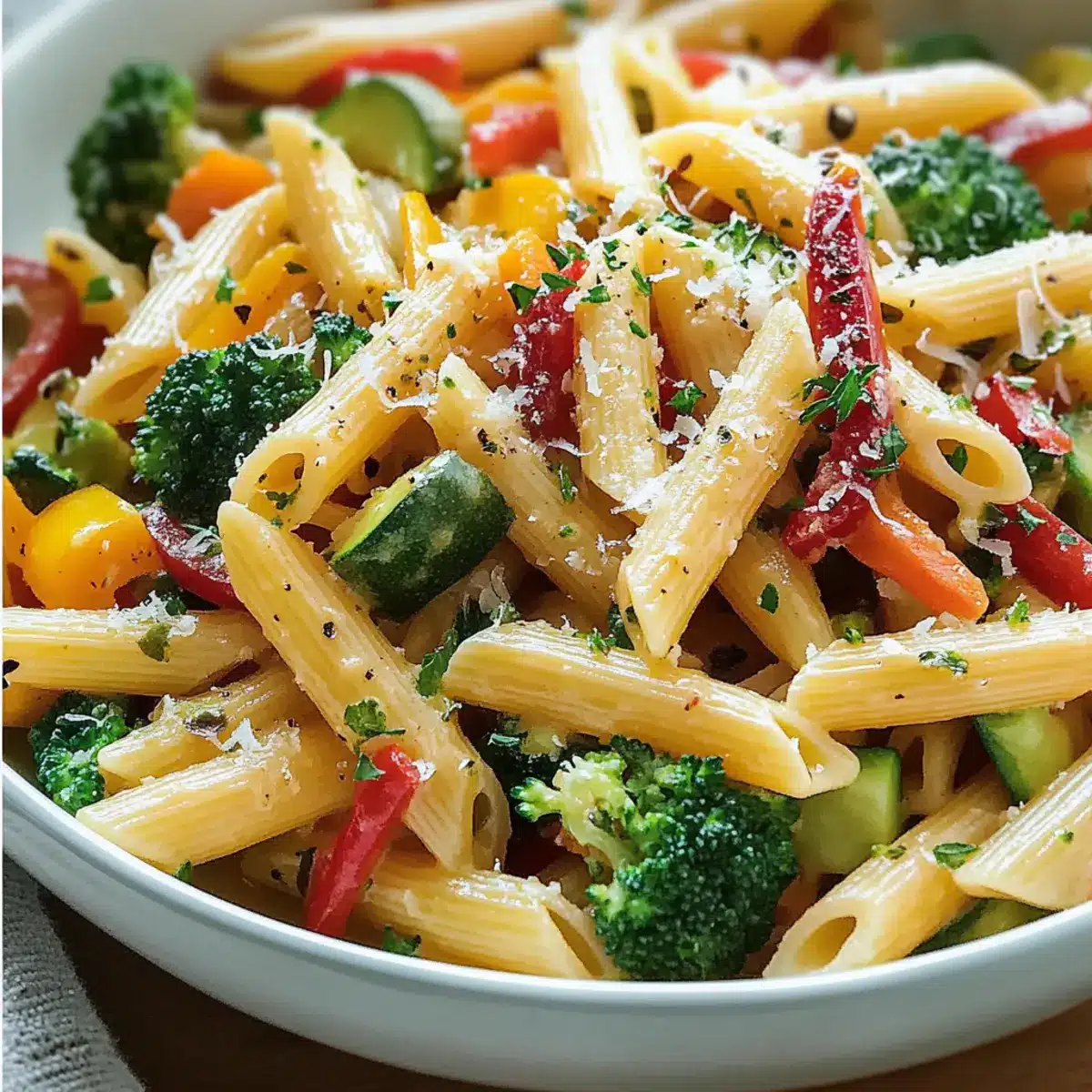
Pasta Primavera: Fresh Veggie Bliss Recipe FAQs
What vegetables are best for Pasta Primavera?
Absolutely! The beauty of Pasta Primavera lies in its versatility. You can use a variety of seasonal vegetables like zucchini, asparagus, bell peppers, or even snap peas. Just make sure they’re fresh! Look for vibrant colors and avoid any with dark spots or wilting.
How should I store leftover Pasta Primavera?
After enjoying a delicious dinner, store leftover Pasta Primavera in an airtight container in the fridge for up to 3 days. Let it cool to room temperature before sealing to keep it fresh. If you need to store it longer, freeze it in portions for up to 2 months. Just remember to allow some space for expansion when freezing!
Can I freeze Pasta Primavera?
Yes, you can freeze Pasta Primavera! To do so, let the cooked dish cool completely. Then, portion it into freezer-safe containers and seal tightly, ensuring to leave a little room at the top for the pasta to expand. When you’re ready to enjoy it again, simply thaw it in the fridge overnight and reheat on the stovetop, adding a splash of olive oil or reserved pasta water for a creamy texture.
What should I do if my vegetables are too soft?
Very! If your veggies become too soft while cooking, it’s often a result of sautéing for too long. To prevent this, add the vegetables in stages according to their cooking times—harder ones like carrots first, and softer veggies like zucchini or tomatoes last. If you find yourself with soggy veggies, don’t worry! You can still sneak in some fresh herbs or a sprinkle of lemon juice before serving to liven them up.
Is Pasta Primavera suitable for gluten-free diets?
Yes, indeed! You can easily make Pasta Primavera gluten-free by substituting penne pasta with gluten-free pasta options, such as brown rice or chickpea pasta. Just make sure to read the labels, ensuring they don’t contain any hidden gluten ingredients. This way, everyone can enjoy a plate of fresh veggie bliss together!
Can I prepare the vegetables ahead of time?
Absolutely! I often prep my veggies a day or two in advance. Chop them and store them in airtight containers in the fridge for up to 3 days, ensuring they’re ready for a quick and easy meal when you’re short on time. This little prep step can make weeknight cooking a breeze!
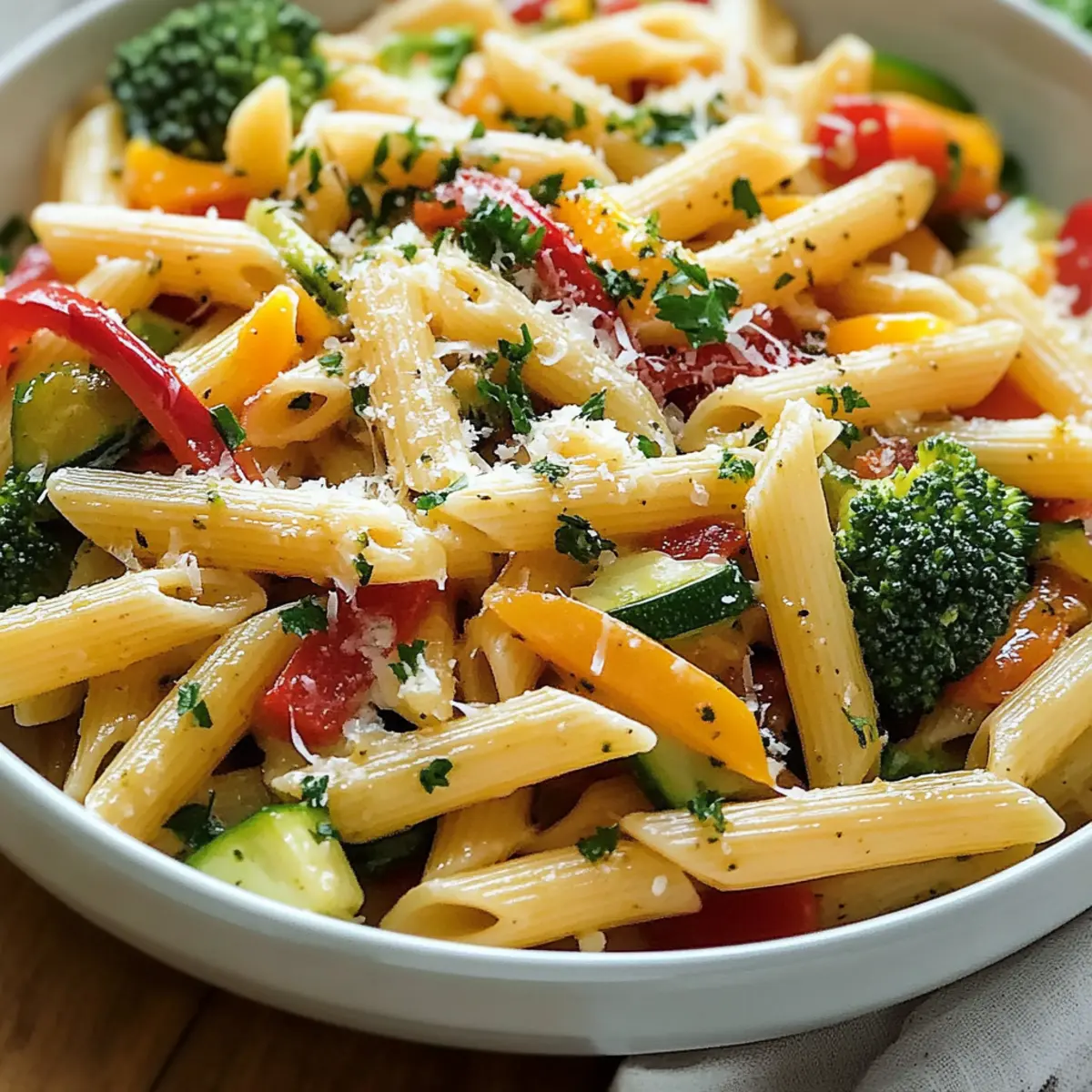
Pasta Primavera: Fresh Veggie Bliss for a Colorful Dinner
Ingredients
Equipment
Method
- Bring a large pot of salted water to a rolling boil over high heat. Add penne pasta and cook for 10-12 minutes, or until al dente. Reserve ½ cup of the starchy pasta water, then drain the rest.
- In a deep skillet or large sauté pan, heat 2 tablespoons of olive oil over medium-high heat. Allow the oil to shimmer.
- Add diced red onion and sliced carrots to the skillet, sautéing for about 2 minutes until fragrant and the onions have slightly softened.
- Toss in the broccoli florets and sliced red bell pepper into the skillet. Sauté for another 2 minutes, allowing the vegetables to turn bright and tender-crisp.
- Stir in the yellow squash and zucchini, continuing to sauté for an additional 2-3 minutes until just starting to soften.
- Add minced garlic, halved grape tomatoes, and dried Italian seasoning to the skillet. Sauté for another 2 minutes.
- Carefully add the drained penne pasta to the skillet, mixing well with the sautéed vegetables.
- Drizzle fresh lemon juice over the pasta mixture and season with salt to taste. Add reserved pasta water to reach desired consistency.
- Sprinkle grated Parmesan cheese and chopped fresh parsley over the dish, tossing lightly to combine.
Leave a Reply