
As the scent of sizzling garlic wafts through the air, I’m transported to the bustling streets of Seoul, where the vibrant colors of Japchae come to life. This beloved Korean stir-fried noodle dish, made with sweet potato glass noodles, is far more than just a dinner—it’s a celebration of flavors and textures. With the option to customize it with chicken, tofu, or a spicy gochujang kick, Japchae is not only a delightful main course but also a healthy, gluten-free choice packed with nutrients. Each bite is a blend of chewy noodles, tender vegetables, and savory goodness that transforms any meal into a comforting feast. Curious to find out how to make this colorful dish your own? Let’s dive into the delicious world of Japchae!
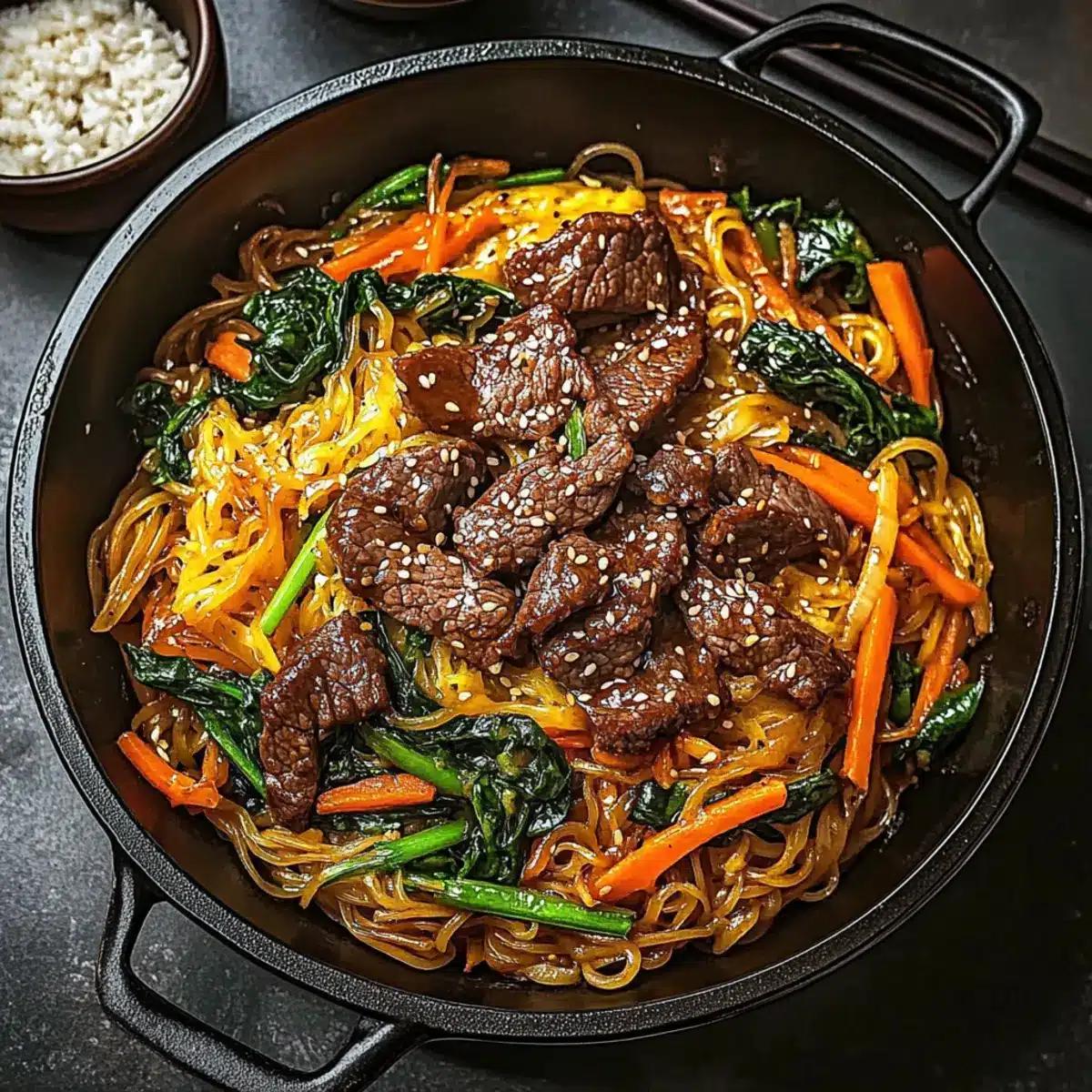
Why is Japchae so beloved?
Vibrant Colors: The array of colorful vegetables not only makes for a stunning presentation but also adds a variety of nutrients.
Customization: Whether you prefer chicken, tofu, or an extra punch of spice from gochujang, you can tailor this dish to suit your cravings.
Quick to Prepare: With easy steps, this dish comes together in around 30 minutes, making it perfect for busy weeknights.
Crowd-Pleaser: Japchae is ideal for gatherings, bringing everyone together with its delicious, shareable nature.
Nutritious Delight: Filled with vitamins and gluten-free sweet potato noodles, it offers a satisfying meal that won’t weigh you down.
Dive into this delightful recipe and discover why it’s cherished in homes across Korea!
Japchae Ingredients
For the Noodles
• Sweet Potato Noodles (Dangmyeon) – Essential for authentic Japchae; offers a chewy texture that enhances the dish’s unique experience.
For the Protein
• Beef – Provides protein and rich flavor; substituting with chicken, tofu, or shiitake mushrooms creates vegetarian-friendly options.
For the Vegetables
• Carrots – Adds sweetness and vibrant color; feel free to replace with bell peppers for a delightful crunch.
• Spinach – Contributes a fresh, lively color and nutrients; kale can be used as an alternative for more robustness.
• Onion – Offers aromatic depth; any onion variety works, including green onions for a milder taste.
For the Sauce and Seasoning
• Soy Sauce – The main seasoning; opt for tamari if gluten-free is preferred.
• Sesame Oil – Adds a nutty flavor; in its absence, use olive oil with sesame seeds for aroma.
• Garlic – Enhances overall flavor; freshly minced is best, but garlic powder can substitute if needed.
For Garnish
• Green Onions – Refreshes the dish with a crispy finish, elevating the overall presentation.
There’s no limit to how you can customize your Japchae—enjoy this versatile and delicious dish!
Step‑by‑Step Instructions for Japchae
Step 1: Soak the Noodles
Begin by soaking the sweet potato noodles (dangmyeon) in warm water for about 30 minutes. This will allow them to soften, achieving the perfect chewy texture essential for Japchae. Once the noodles are tender, drain them thoroughly to remove any excess water before moving onto the next step.
Step 2: Marinate the Beef
While the noodles soak, slice the beef thinly against the grain. In a bowl, mix the beef with a splash of soy sauce, a drizzle of sesame oil, and minced garlic. Allow it to marinate for about 10 minutes, which enhances the flavor and tenderness of the meat, preparing it for the stir-frying process.
Step 3: Cook the Beef
Heat a large pan or wok over medium-high heat and add a bit of cooking oil. Once the oil shimmers, add the marinated beef to the pan, stirring frequently. Cook for about 3-5 minutes or until the beef is nicely browned. Remove the beef from the pan and set it aside, letting the flavors meld in the residual oil.
Step 4: Stir-Fry the Vegetables
In the same pan, add a bit more oil and before heating, toss in sliced onions and carrots. Stir-fry for about 3-4 minutes until the vegetables soften, vibrant, and fragrant. Add the spinach and minced garlic; continue cooking for another 1-2 minutes until the spinach wilts beautifully, contributing a fresh color to your Japchae.
Step 5: Combine Ingredients
Return the cooked beef to the pan with the vegetables and add the soaked sweet potato noodles. Pour in soy sauce and another dash of sesame oil. Use tongs or chopsticks to carefully toss everything together for about 5 minutes, ensuring all ingredients blend well and the noodles are heated through, creating an enticing aroma.
Step 6: Final Touches
Allow the dish to cook for an additional 2-3 minutes, stirring gently to meld the flavors. You want the noodles to be coated evenly with the sauce and for the final meal to be warm and inviting. Once everything looks well incorporated and heated, you’re ready to serve.
Step 7: Serve and Garnish
Transfer your beautifully prepared Japchae to a serving platter. Garnish with sliced green onions for a pop of color and flavor. This delightful Korean noodle stir-fry can be enjoyed on its own or paired with other dishes, ready to impress your family and friends with its savory depth and appealing presentation.
Make Ahead Options
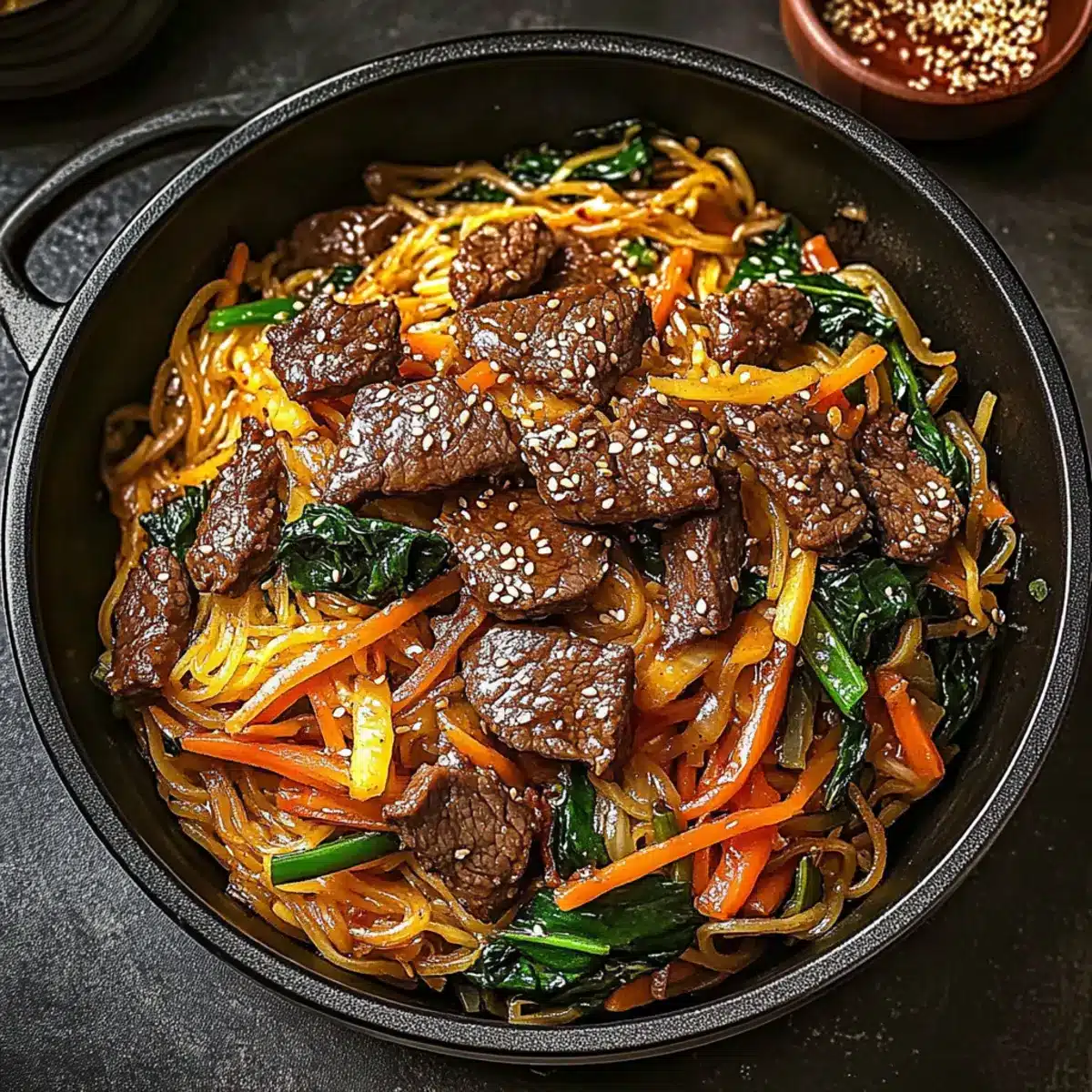
Japchae is a fantastic dish for meal prep enthusiasts! You can prepare the sweet potato noodles (dangmyeon) and marinated beef up to 24 hours in advance. Simply soak the noodles in warm water and marinate the beef with soy sauce, sesame oil, and garlic, then refrigerate each component separately to maintain their distinct textures. The vegetables can also be sliced and stored, ready for quick stir-frying. When you’re ready to enjoy your Japchae, heat a bit of oil in a pan, quickly stir-fry the vegetables, combine everything, and toss until heated through. This way, you’ll have a delicious meal ready with minimal effort, perfect for busy weeknights!
How to Store and Freeze Japchae
Fridge: Store leftover Japchae in an airtight container in the refrigerator for up to 3 days. This helps retain the dish’s flavors and prevents moisture loss.
Freezer: For longer storage, freeze Japchae in a freezer-safe container for up to 2 months. When you’re ready to enjoy it, simply let it thaw overnight in the fridge.
Reheating: Gently reheat the noodles in a skillet over medium heat, adding a splash of water or soy sauce to maintain moisture and prevent sticking. Enjoy your delightful Japchae warmed through!
What to Serve with Delicious Japchae?
As you savor the delicate flavors of Japchae, consider accompanying it with complementary dishes that will elevate your meal to a delightful feast.
-
Kimchi: This classic Korean side dish brings a spicy, tangy crunch that perfectly contrasts the sweetness of the noodles and adds depth to your meal.
-
Garlic Fried Rice: Fragrant and hearty, it’s a flavorful addition that balances the lightness of Japchae, making every bite satisfyingly full.
-
Pickled Vegetables: Bright and tangy pickles provide a refreshing companion, cutting through the richness of the noodles while adding an extra layer of flavor.
-
Cucumber Salad: Crispy, cool cucumbers tossed in a sesame dressing offer a delightful crunch, enhancing your plate with fresh vibrancy and a touch of nutty aroma.
-
Korean Dumplings (Mandu): These savory pockets can be steamed or fried, making them a wonderful side that matches the soft, chewy texture of Japchae.
To create a complete experience, consider pairing your meal with a chilled glass of sweet rice drink (Sikhye) or a warm cup of green tea. Finish off with a light dessert such as fresh fruit to cleanse the palate and round out your culinary journey!
Japchae Variations & Substitutions
Feel free to put your own spin on this delicious dish, creating a unique take on traditional Japchae that delights your senses.
-
Vegetarian Delight: Substitute beef with tofu or shiitake mushrooms for a hearty vegetarian option that retains rich flavors. You’ll still enjoy the savory combination of sweet potato noodles and vibrant vegetables.
-
Dairy-Free: When using soy sauce, ensure it’s gluten-free by opting for tamari, allowing those on a dairy-free diet to indulge without worry.
-
Extra Crunch: Add bell peppers or zucchini for a delightful crunch and burst of color in your Japchae. These veggies complement the chewiness of the noodles beautifully.
-
Spicy Kick: Incorporate gochujang or fresh chili slices for those who love a hint of spice. This addition will elevate your dish, making it truly unforgettable.
-
Herb Infusion: Toss in fresh herbs like cilantro or basil as a garnish. They will brighten up the dish and compliment the sesame oil beautifully.
-
Protein Swap: Feel free to exchange beef for shredded chicken or leftover roast. Both offer a quick and tasty alternative, perfect for using up pantry leftovers.
-
Sweet Twist: Add a hint of sweetness by including a tablespoon of sugar or honey to the sauce. This adds a wonderful balance to the savory elements.
-
Texture Boost: Mix in some crunchy walnuts or sunflower seeds for an added nutty flavor and delightful texture contrast. They bring satisfaction to every bite.
Explore these variations and create a Japchae that reflects your taste! For more ideas on customization, consider checking out my sections on quick stir-fried vegetables or delicious healthy protein swaps that suit your preferences. Each adjustment opens a new culinary adventure!
Helpful Tricks for Japchae
Noodle Soaking: Ensure the noodles are soaked properly in warm water until fully softened to avoid any clumping during cooking.
Individual Cooking: Stir-fry each ingredient separately before combining them to maintain distinct flavors and textures, enhancing the overall taste of your Japchae.
Flavor Control: Adjust the amount of soy sauce based on your dietary preferences. Opt for reduced-sodium options or tamari for gluten-free options to manage sodium levels.
Veggie Freshness: Add spinach last to ensure it retains its vibrant color and nutrients. Overcooking can lead to a wilted appearance and loss of freshness.
Garnish Generously: Don’t skip the green onion garnish; it adds a fresh, crispy finish that brightens up the dish, elevating both flavor and presentation.
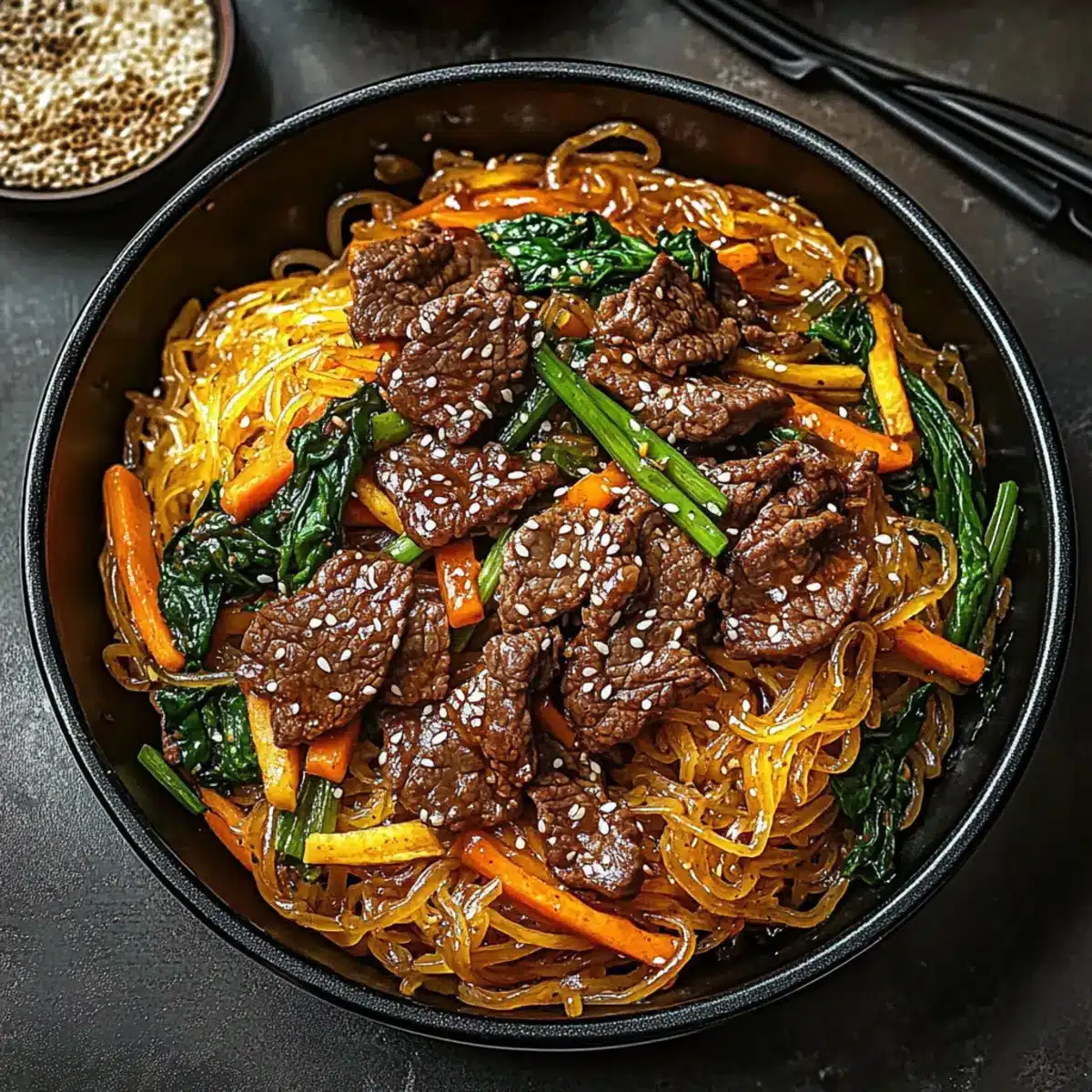
Japchae Recipe FAQs
How do I select the best sweet potato noodles for Japchae?
Absolutely! When choosing sweet potato noodles (dangmyeon), look for packages that are clear and free from any dark spots or blemishes. Opt for organic or high-quality brands if possible, as they tend to have better texture and taste. If you’re trying it for the first time, I recommend checking the cooking instructions on the package, as soaking times can vary depending on thickness.
How should I store leftover Japchae?
Very good question! Store your leftover Japchae in an airtight container in the refrigerator for up to 3 days. To reheat, gently warm it in a skillet over medium heat, adding a splash of water or soy sauce to keep the noodles from becoming dry or sticky. This simple method preserves flavors while reviving that delightful chewiness!
Can I freeze Japchae for later use?
Yes, indeed! If you want to freeze your Japchae, place it in a freezer-safe container or resealable bag, ensuring to remove as much air as possible. It can be frozen for up to 2 months. When you’re ready to enjoy it again, transfer the dish to the refrigerator to thaw overnight. Reheat gently in a skillet, adding a bit of water or soy sauce to bring back the original texture.
What should I do if my noodles become clumpy during cooking?
Oh no, clumpy noodles can be a bit of a hiccup! To prevent this, make sure you soak the sweet potato noodles until they’re fully hydrated and soft. If they do clump during cooking, add a splash of warm water or a drizzle of sesame oil to loosen them up as you stir them. Also, remember to heat each ingredient separately before combining, as this helps maintain their distinct textures.
Is Japchae suitable for people with gluten allergies?
Absolutely! Japchae is a wonderful option for those avoiding gluten, especially if you use tamari instead of regular soy sauce. The sweet potato noodles themselves are gluten-free, making this dish not only delicious but also safe for individuals with gluten sensitivities. Just double-check the labels on your sauces to ensure that they are also gluten-free!
Can I customize the veggies or protein in my Japchae?
The more the merrier! Japchae is incredibly versatile; you can easily swap out the beef for chicken, tofu, or even keep it vegan by omitting the protein altogether. Similarly, feel free to get creative with vegetables—adding bell peppers, zucchini, or mushrooms can enhance the flavor and texture. Adjust to your liking to make this dish your own!
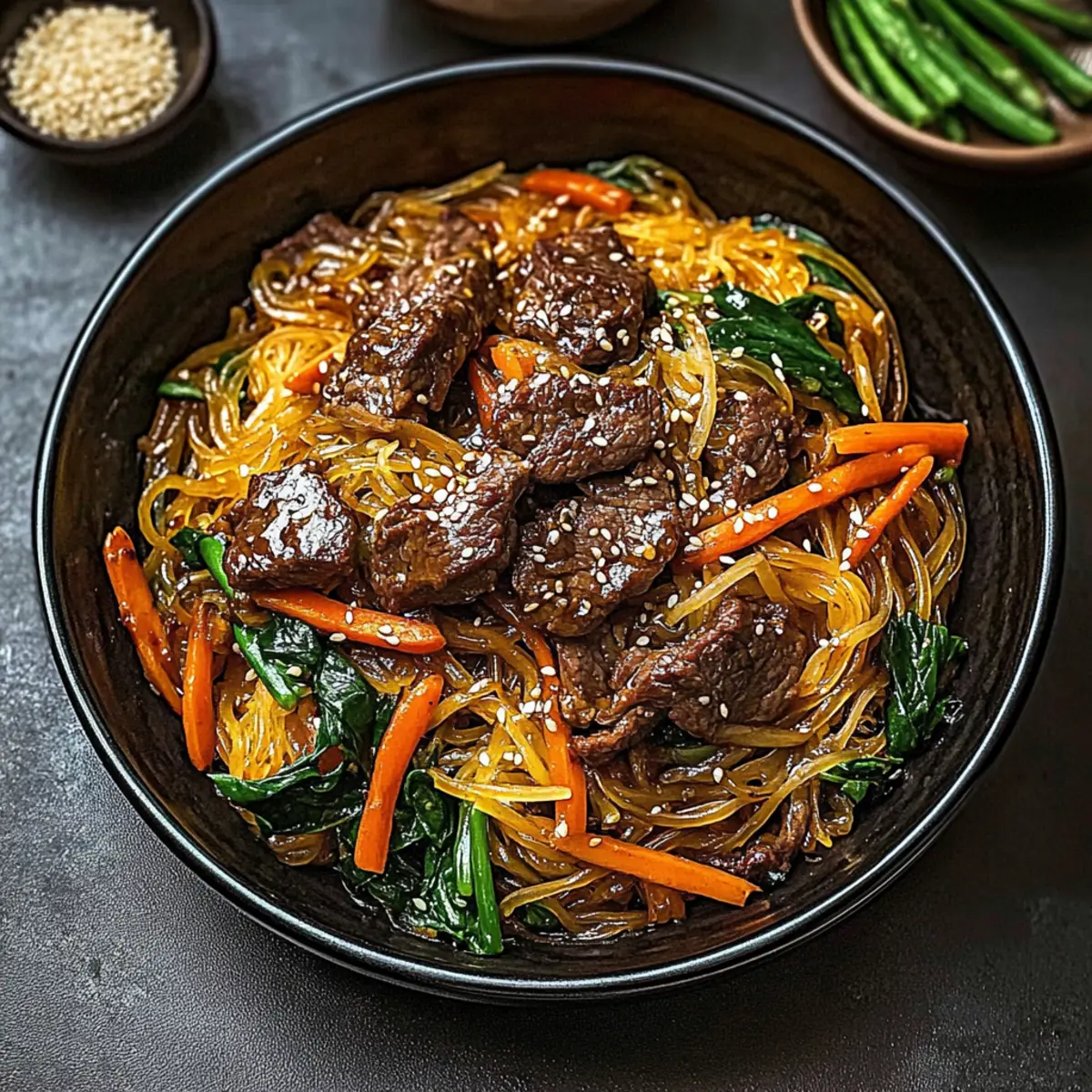
Delicious Japchae: Customizable Korean Noodle Stir-Fry Delight
Ingredients
Equipment
Method
- Soak the sweet potato noodles in warm water for about 30 minutes.
- Slice the beef thinly and marinate with soy sauce, sesame oil, and minced garlic for 10 minutes.
- Heat oil in a pan, add marinated beef, and cook until browned for 3-5 minutes.
- Stir-fry sliced onions and carrots in the same pan for 3-4 minutes.
- Add spinach and garlic, cooking until the spinach wilts.
- Return the beef to the pan, add soaked noodles, soy sauce, and sesame oil. Toss for 5 minutes.
- Cook for an additional 2-3 minutes, then serve and garnish with green onions.
Leave a Reply