
As the sun sets and the scents of the kitchen dance through the air, I find myself reaching for ingredients that promise comfort and joy. Enter Japchae—a beloved Korean glass noodle stir fry that’s not just a feast for the eyes but an experience for the palate. With its chewy sweet potato noodles and a colorful array of vegetables, this easy recipe bursts with customizable options, making it perfect for any gathering or a cozy night in. Whether you’re a die-hard meat-lover or a dedicated vegetarian, Japchae is an alluring dish that you can tweak to fit any diet. Plus, it’s a scrumptious way to enjoy wholesome ingredients without the hassle of long prep times. Are you ready to dive into this delightful stir fry and explore its flavorful potential?
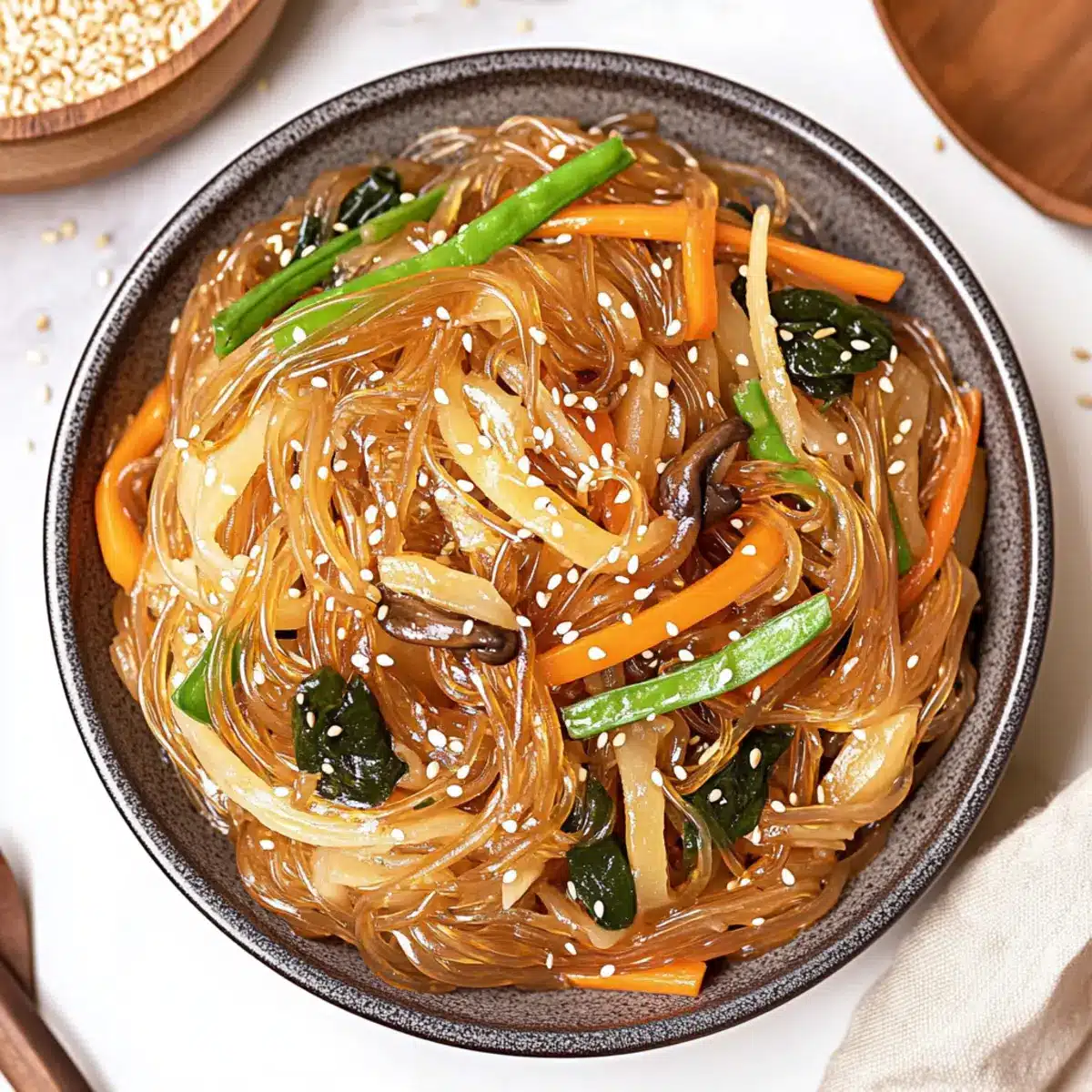
Why is Korean Glass Noodle Stir Fry Amazing?
Versatile Delight: Japchae is not just a dish; it’s a canvas for your culinary creativity! Easily adjust ingredients to make it vegetarian-friendly or vegan, just like our Broccoli Mein Noodles can be tailored to fit any preference.
Quick & Easy: With minimal prep and cooking time, this dish is a lifesaver for busy nights and is perfect for whipping up a satisfying meal in a flash.
Flavor Explosion: The balance of sweet and savory from the sauce beautifully complements the chewy noodles—making each bite an enjoyable experience.
Crowd Pleaser: Whether served at dinner parties or family gatherings, this dish is sure to impress and satisfy everyone!
Colorful Presentation: Vibrant veggies add a pop of color, turning your table into a celebration of flavors. It’s a delightful way to make home-cooked meals exciting!
Korean Glass Noodle Stir Fry Ingredients
For the Noodles
• Sweet Potato Glass Noodles – These provide that signature chewy texture; you can substitute with rice noodles for a different flavor experience.
For the Protein
• Beef or Pork (16 ounces) – Adds protein and depth of flavor; feel free to replace with tofu for a vegetarian or vegan-friendly option.
• Large Eggs (2, beaten) – Contributes richness and body to the dish; omit for a vegan version.
For the Vegetables
• Carrot (1, julienned) – Offers sweetness and color; bell peppers or zucchini work well if you want to switch it up.
• Yellow Onion (1, sliced) – Enhances the overall flavor; shallots are a great substitute if you have them on hand.
• Mushrooms (3, sliced) – Adds umami goodness; shiitake or button mushrooms are both excellent choices.
• Baby Spinach (2 cups) – Provides freshness and vibrancy; kale or bok choy can be used for a different taste.
• Green Onions (2 stalks, cut into pieces) – Lends a mild onion flavor; chives can be used in place of green onions.
For the Stir Fry
• Cooking Oil – Essential for frying; can use sesame oil for a nuttier flavor or vegetable oil for a neutral option.
• Salt and Black Pepper – Basic seasoning to elevate taste; always tailor to your preference.
For the Japchae Sauce
• Light Sodium Soy Sauce (7 tablespoons) – Acts as the base for the sauce; regular soy sauce or tamari can make it gluten-free.
• Honey (3 tablespoons) – Balances out the sauce’s flavors; agave syrup serves as a perfect substitute for vegan needs.
• Brown Sugar (2 tablespoons) – Enhances sweetness; adjust according to your taste preference.
• Toasted Sesame Oil (2 tablespoons) – Delivers rich, nutty undertones; avoid substitutes for the best flavor.
Prepare for a delicious Korean glass noodle stir fry that’s as enjoyable to make as it is to eat!
Step‑by‑Step Instructions for Korean Glass Noodle Stir Fry
Step 1: Prepare the Sauce
In a mixing bowl, whisk together 7 tablespoons of light sodium soy sauce, 3 tablespoons of honey, 2 tablespoons of brown sugar, and 2 tablespoons of toasted sesame oil until the mixture is smooth and well combined. Set aside the sauce, as it will enrich the flavor of your Korean glass noodle stir fry later.
Step 2: Cook the Noodles
Bring a pot of water to a rolling boil over high heat, then add your sweet potato glass noodles. Cook for 10–15 minutes, stirring occasionally, until the noodles are tender yet still chewy. Once done, drain the noodles and rinse them under cold water to stop the cooking process and prevent them from sticking together.
Step 3: Make the Egg Crepe
Heat a nonstick skillet over medium heat and pour in the beaten eggs, swirling to create a thin layer. Let the eggs cook for about 1–2 minutes until set, then slide them onto a cutting board. Once cooled, slice the egg crepe into thin strips to add a lovely texture to your Korean glass noodle stir fry.
Step 4: Sear the Meat
In the same skillet, add a splash of cooking oil and increase the heat to medium-high. Sear your prepped beef or pork for about 4–5 minutes or until browned and cooked through. Once finished, remove the meat from the pan and set it aside, allowing its juices to develop a deeper flavor in the next steps.
Step 5: Cook the Vegetables
Add a bit more oil to the pan, then sauté the julienned carrots for about 2 minutes until they start to soften. Next, toss in the sliced onions and mushrooms, cooking for an additional 3 minutes. Finally, stir in the baby spinach and green onions, cooking all the vegetables until tender, around 2 minutes more.
Step 6: Combine Ingredients
Lower the heat and pour the prepared sauce into the pan with the vegetables, heating it briefly until it begins to bubble. Add the cooked glass noodles and the seared meat into the mix, tossing everything together. Stir well for 2–3 minutes, ensuring the noodles are evenly coated in the sauce and heated through.
Step 7: Serve the Dish
Transfer the beautifully combined Korean glass noodle stir fry to serving plates or a bowl, garnishing with sesame seeds if desired. This delightful dish can be enjoyed hot, warm, or even at room temperature, making it a versatile addition to your dinner table or a fantastic meal prep option!
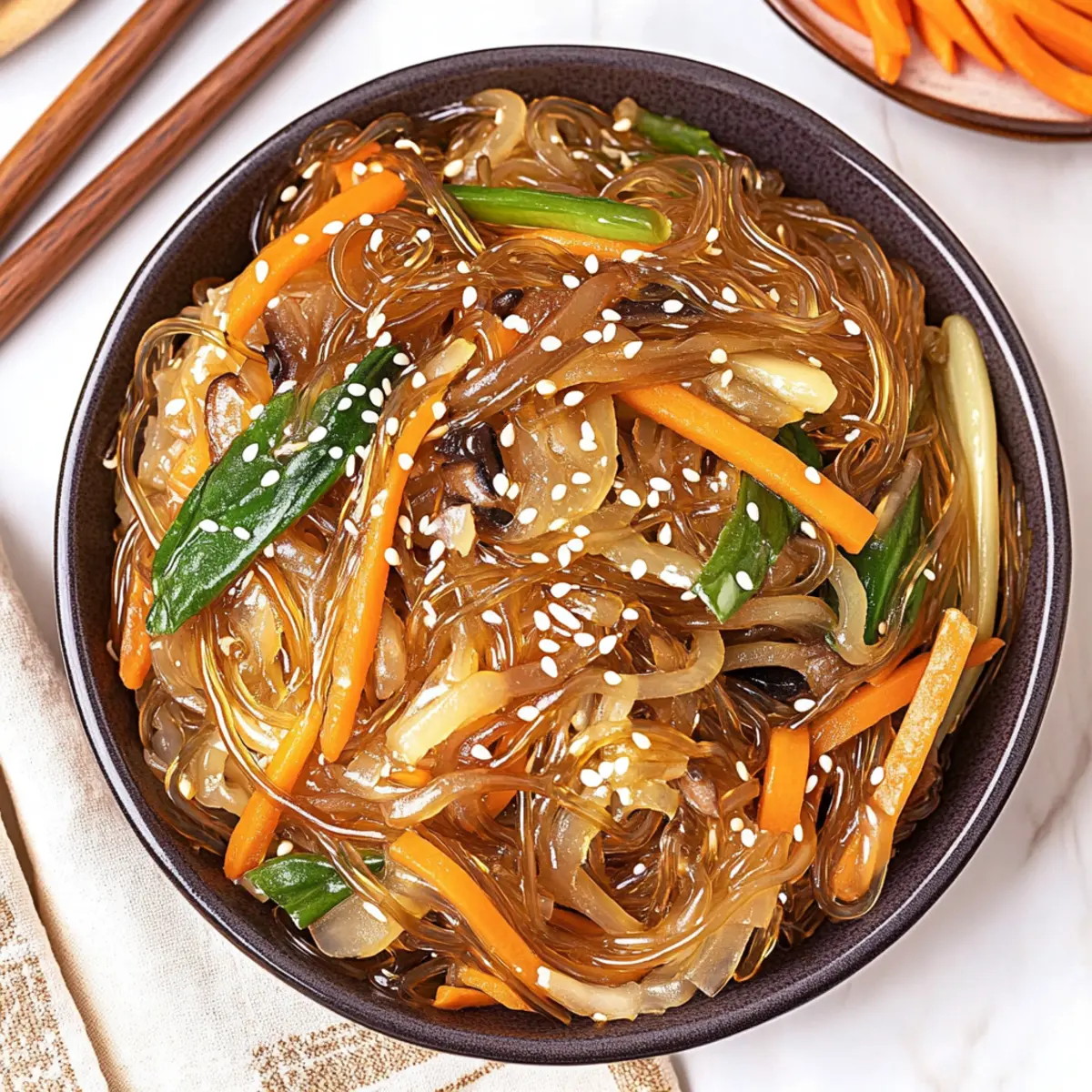
Storage Tips for Korean Glass Noodle Stir Fry
Fridge: Store leftover Korean glass noodle stir fry in an airtight container for up to 3 days to maintain freshness and flavor.
Freezer: For longer storage, freeze portions in airtight containers or freezer bags for up to 2 months. Thaw in the fridge overnight before reheating.
Reheating: Reheat gently in the microwave or on the stovetop, adding a splash of water or broth to restore moisture and prevent drying out.
Avoid Storing: Do not leave the dish at room temperature for more than 2 hours to ensure food safety.
Make Ahead Options
These Korean glass noodle stir fry (Japchae) preparations are perfect for meal prep, saving you time on busy weeknights! You can cook the sweet potato glass noodles and sauté the vegetables up to 24 hours ahead; just be sure to rinse the noodles under cold water after cooking to keep them bouncy. Store the noodles and veggies in separate airtight containers in the fridge. When you’re ready to serve, simply reheat the vegetables in a pan, add the noodles, and incorporate the prepared sauce, tossing everything until heated through and flavors meld. This way, you’ll still enjoy a delicious and vibrant Japchae with minimal effort!
Korean Glass Noodle Stir Fry: Customize Your Dish
Feel empowered to personalize your japchae experience, bringing your culinary vision to life with delightful twists and substitutes!
- Vegetarian Option: Omit the beef or pork entirely and add more colorful vegetables or tofu for a satisfying vegetarian delight.
- Gluten-Free: Swap the light sodium soy sauce with tamari to keep your dish gluten-free without sacrificing flavor.
- Sweet Potato Noodles: If you can’t find sweet potato noodles, using rice noodles or even udon can create a different yet delicious texture.
- Extra Crunch: Toss in some chopped nuts, like cashews or peanuts, to give your dish an added crunch and nutty flavor.
- Spicy Kick: Want some heat? Add a tablespoon of gochujang or sprinkle red pepper flakes to amp up the flavor profile.
- Citrusy Zing: A few drops of lime juice just before serving can brighten the flavors and add a refreshing twist!
- Dairy-Free: Simply skip the eggs for a fully dairy-free version while still enjoying a rich texture with the other ingredients.
- Mix & Match: For a different taste, incorporate seasonal vegetables like bok choy or asparagus, or try the vibrant combo found in a dish like Saucy Ramen Noodles.
There are so many ways to create a personalized plate that reflects your tastes—feel free to get creative with your version of this delightful Korean glass noodle stir fry!
What to Serve with Classic Japchae?
As you enjoy the delightful flavors of this Korean glass noodle stir fry, consider these delicious pairings that elevate your meal into a cheerful feast.
-
Kimchi: The spicy tang of this fermented Korean dish brings a zesty contrast, enhancing the sweetness of the japchae. A must-have for a true Korean experience!
-
Steamed Rice: Fluffy, white rice serves as a perfect base to soak up the savory sauce, balancing the rich flavors of the noodles.
-
Korean Fried Chicken: Crispy with a sweet and spicy glaze, it provides a satisfying crunch that complements the chewy texture of the glass noodles beautifully.
-
Pickled Radish: A crisp and refreshing bite that cuts through the richness, this bright side adds a layer of flavor while cleansing the palate.
-
Sesame Spinach Salad: A light, nutty salad with blanched spinach adds freshness and a contrasting texture to the dish, making each forkful delightfully varied.
-
Cold Soba Noodles: These nutty, chilled noodles offer a refreshing contrast to the warm japchae; serve with a dipping sauce for an exciting twist.
-
Miso Soup: A warm, umami-rich broth pairs well with japchae, making for a comforting addition that resonates with Japanese flavors.
-
Green Tea: This delicate drink elevates the meal, acting as a soothing counterpoint to the dish’s bold flavors while promoting digestion.
-
Fruit Dessert: To finish off, a refreshing fruit salad or slices of sweet melon cleanse the palate, providing a light and sweet end to your meal.
Expert Tips for Japanese Glass Noodle Stir Fry
-
Rinse Thoroughly: Rinse your sweet potato glass noodles well after cooking to ensure a bouncy texture and prevent sticking.
-
Customize Vegetables: Don’t hesitate to mix in seasonal vegetables like bell peppers or zucchini for added flavor and nutrition in your Korean glass noodle stir fry.
-
Adjust Sweetness: Taste your sauce before adding it to the noodles and adjust the sweetness to your liking using more or less honey or brown sugar as desired.
-
Add Heat: If you enjoy a bit of spice, consider adding gochujang or red pepper flakes for an extra kick in your stir fry!
-
Rest Before Serving: Allow your finished japchae to sit for a few minutes before serving; this helps the flavors meld beautifully.
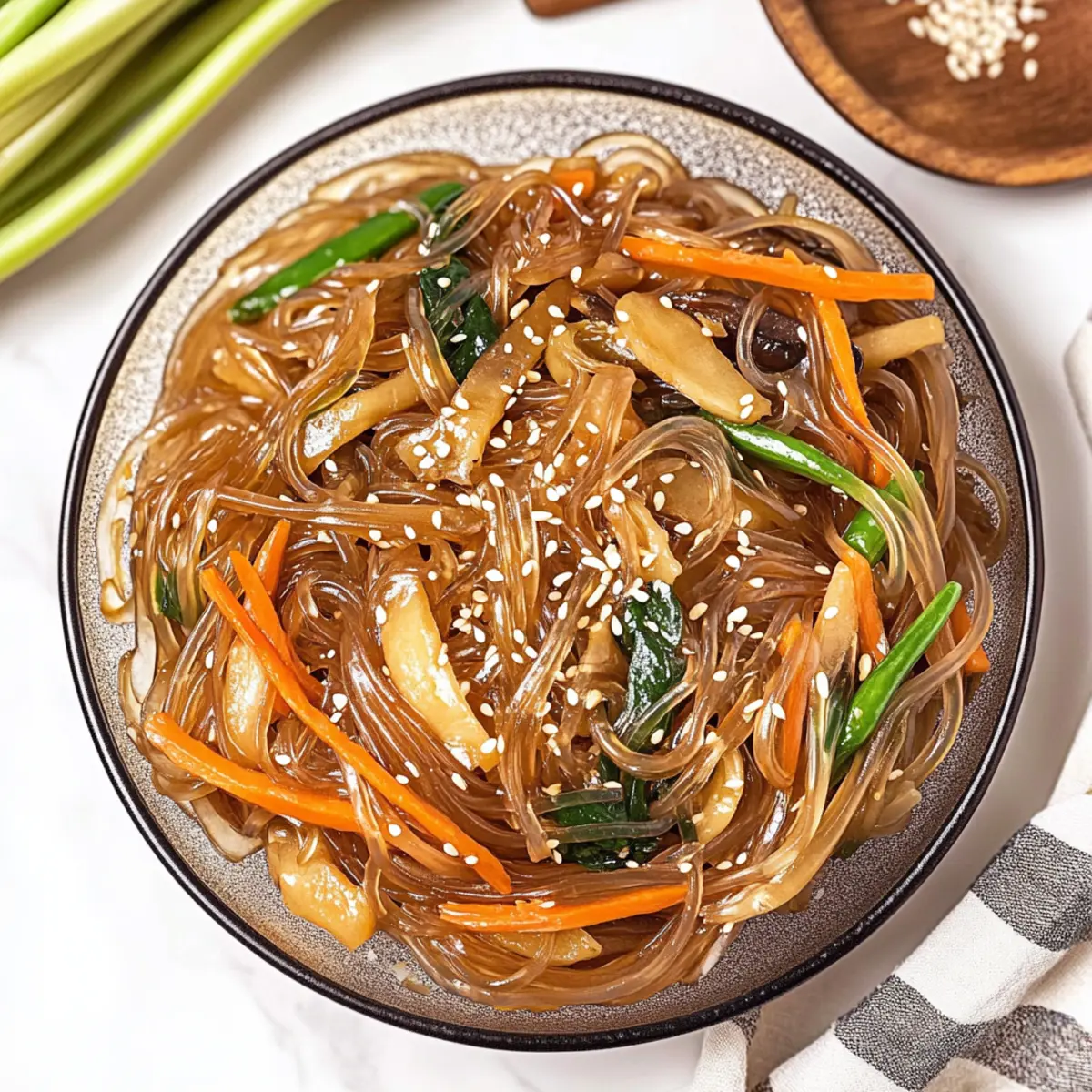
Korean Glass Noodle Stir Fry Recipe FAQs
What kind of noodles should I use for Japchae?
For traditional Japchae, you should use sweet potato glass noodles, which provide that signature chewy texture. If you’re looking for alternatives, rice noodles can be used, though they will slightly alter the dish’s overall taste and texture.
How do I store leftover Korean glass noodle stir fry?
Leftover Korean glass noodle stir fry can be stored in an airtight container in the fridge for up to 3 days. Make sure to let it cool before sealing it. When you’re ready to enjoy, reheat gently on the stovetop or in the microwave, adding a splash of water to help regain its moisture.
Can I freeze Japchae?
Absolutely! To freeze your Korean glass noodle stir fry, portion it out into airtight containers or freezer bags, ensuring to remove as much air as possible. It can be frozen for up to 2 months. When you’re ready to eat, thaw it overnight in the fridge and reheat with a splash of water to restore its original texture.
What if my noodles are too sticky after cooking?
If you find your noodles are sticking together, a quick rinse under cold water right after cooking helps prevent this. Additionally, when reheating leftovers, adding a splash of water to the pan can help loosen things up and bring back their bouncy texture.
Are there any dietary considerations for this recipe?
While Japchae is usually packed with wholesome ingredients, those with soy allergies should substitute soy sauce with coconut aminos or a gluten-free version. For vegan preparations, simply omit the meat and eggs, and you can substitute honey with agave syrup to maintain a similar sweetness.
How do I ensure my vegetables maintain their crunch in Japchae?
To keep your veggies vibrant and slightly crisp, sauté them briefly, starting from the hardest to the softest (like carrots first, then onions, and finally leafy greens). This method helps retain the texture and enhances the visual appeal of your Korean glass noodle stir fry.
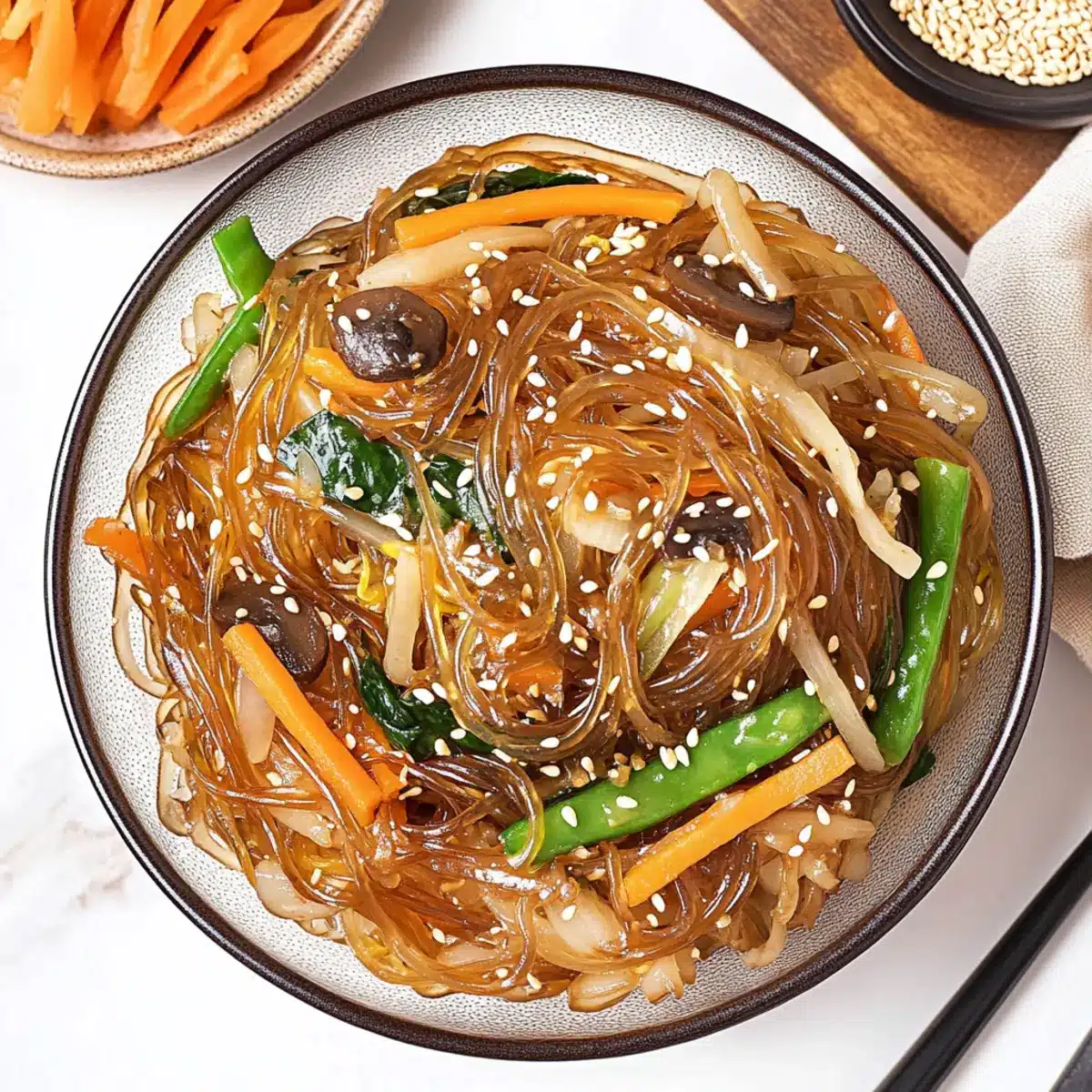
Korean Glass Noodle Stir Fry: A Flavorful Home-Cooked Delight
Ingredients
Equipment
Method
- In a mixing bowl, whisk together the soy sauce, honey, brown sugar, and toasted sesame oil until smooth. Set aside.
- Bring a pot of water to a boil, add glass noodles, and cook for 10-15 minutes until tender. Drain and rinse with cold water.
- In a nonstick skillet, heat the beaten eggs over medium heat, swirling to create a thin layer. Cook for 1-2 minutes, then slice into strips.
- In the same skillet, add cooking oil and sear the beef or pork for about 4-5 minutes until browned, then remove and set aside.
- Sauté the julienned carrots for 2 minutes; add onions and mushrooms, cooking for another 3 minutes. Stir in spinach and green onions for 2 more minutes.
- Lower the heat and pour the sauce into the pan, heating until bubbling. Add noodles and meat, tossing for 2-3 minutes until well combined.
- Serve the stir fry, garnishing with sesame seeds if desired.
Leave a Reply