
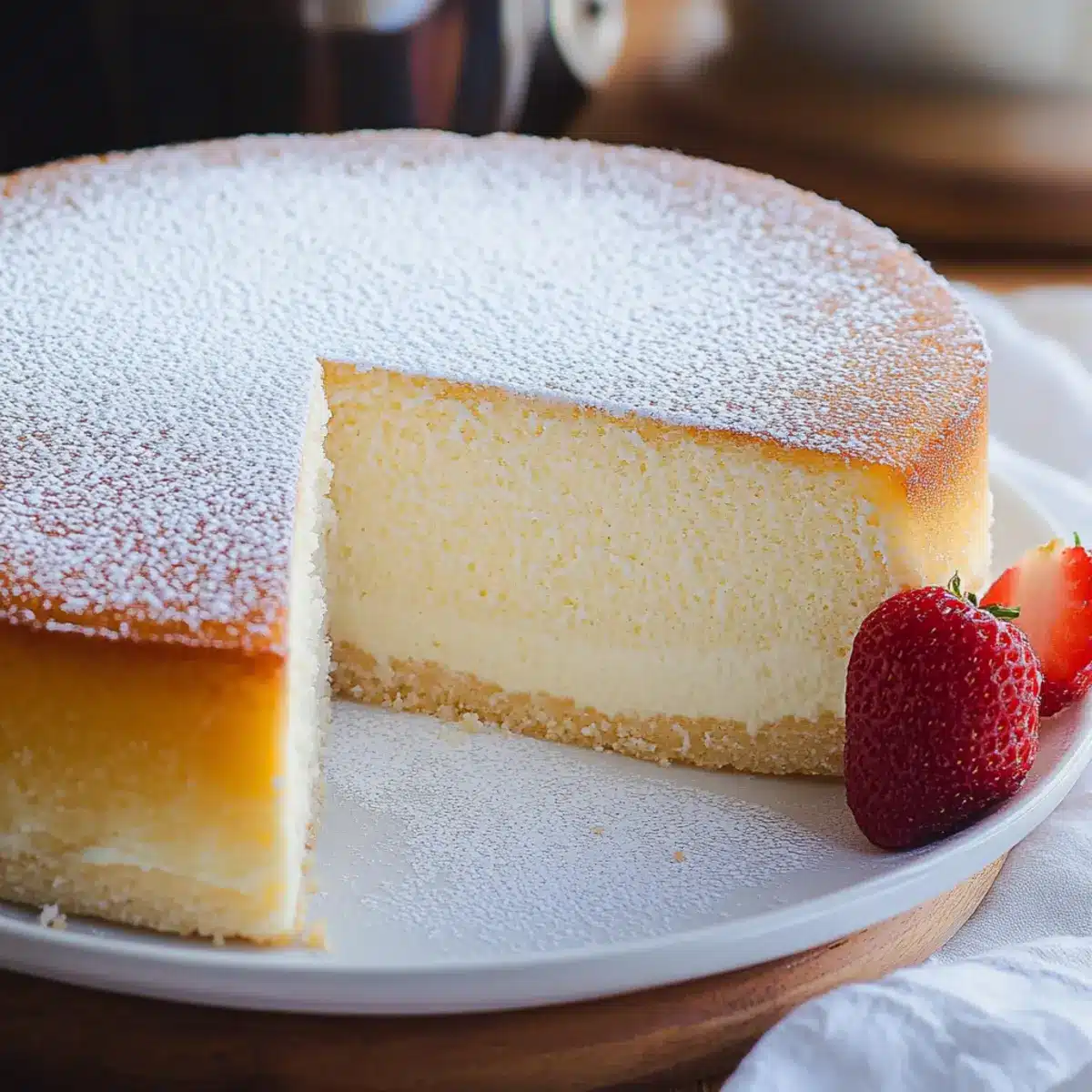
I nearly dropped my spatula when I first pulled this majestic Japanese Cheesecake from the oven! The delightful jiggle of this fluffy cheesecake is a sight to behold, reminiscent of airy soufflés that leave you intrigued. What sets this treat apart is its surprisingly light texture and mildly sweet, tangy flavor that feels indulgent without the guilt. With a simple spin of lemon zest and a whisper of vanilla, it transforms into a heavenly dessert that takes little effort and guarantees a wow factor at any gathering. Perfect for both seasoned home chefs and those just looking to escape the fast-food rut, this low-sugar delight strikes the ideal balance between flavor and comfort. Are you ready to master the art of making this indulgent yet guilt-free Japanese Cheesecake? Keep reading to dive into this fluffy adventure!
Why is Japanese Cheesecake So Special?
Lightness defines this dessert; it’s a fluffy, cloud-like treat perfect for any occasion. Guilt-free indulgence is a highlight, as it features low sugar content without sacrificing flavor. Easy preparation ensures even novice bakers can impress their guests with little effort. Versatile serving options allow you to enjoy it plain or adorned with berries, making it suitable for any palate. Unleash your culinary creativity and enjoy a delightful twist on traditional desserts—your taste buds will thank you! For more exciting Japanese recipes, check out my delicious Japanese Katsu Bowls or indulge in some fluffy Japanese Souffle Pancakes.
Japanese Cheesecake Ingredients
For the Batter
• Eggs – Provide structure and aeration; use large eggs (about 50g each) for best results.
• Cream Cheese – Adds creaminess and rich flavor; make sure it’s softened for easier mixing.
• Heavy Cream – Contributes to moistness and helps achieve the soufflé-like texture; can be substituted with full-fat milk.
• Unsalted Butter – Offers richness and flavor; cut into smaller pieces for easier melting.
• Cake Flour – Essential for a soft, light texture; fluff it up, spoon it, and level it off when measuring.
For Flavor Enhancement
• Lemon Zest – Adds brightness and enhances flavor; optional but highly recommended to elevate the cheesecake.
• Vanilla Extract – Provides aromatic sweetness; optional but enhances overall flavor profile.
For Sweetening
• Granulated Sugar – Sweetens the batter and helps contribute to meringue; essential for achieving the perfect balance.
• Lemon Juice – Balances sweetness with a touch of acidity; optional but adds a refreshing hint that complements the cheesecake.
Getting these ingredients prepped will set you on the right path to creating your own delightful Japanese cheesecake!
Step‑by‑Step Instructions for Light & Fluffy Japanese Cotton Cheesecake
Step 1: Prepare Equipment
Preheat your oven to 300°F (150°C). As the oven warms, line the bottom and sides of an 8-inch round cake pan with parchment paper to prevent sticking. Next, prepare a 9×9-inch baking pan for the water bath, which will help the Japanese cheesecake bake evenly and maintain its delicate texture.
Step 2: Make Base Batter
In a heatproof bowl placed over simmering water, combine 8 ounces of softened cream cheese, ¼ cup of unsalted butter, and ⅓ cup of heavy cream. Stir until the mixture becomes smooth and creamy, which should only take about 3-5 minutes. Remove the bowl from heat and whisk in 3 large egg yolks, ½ cup of sifted cake flour, the zest of 1 lemon, and 1 teaspoon of vanilla extract until homogenous.
Step 3: Prepare Meringue
In a separate clean bowl, whip 6 large egg whites along with ½ teaspoon of lemon juice at medium-high speed until frothy, about 2 minutes. Gradually add ½ cup of granulated sugar in two additions, continuing to whip until medium-soft peaks form, which will take around another 3-4 minutes. This delicate meringue is crucial for achieving the airy quality of your Japanese cheesecake.
Step 4: Combine Meringue and Batter
Gently fold one-third of the whipped meringue into your cheese mixture, being careful not to deflate it. Use a large spatula to scoop the batter from the bottom and bring it to the top, repeating until fully incorporated. Continue this process with the remaining meringue in two additional batches, ensuring the mixture remains light and fluffy, which is key to the texture of your light and fluffy Japanese cheesecake.
Step 5: Bake
Pour the combined batter into the prepared cake pan, tapping the pan gently on the counter to release any trapped air bubbles. Place this pan inside the prepared water bath in the larger baking pan. Bake in the preheated oven for 80-90 minutes or until the top is golden brown and a skewer inserted into the center comes out clean, indicating the fluffy Japanese cotton cheesecake is done.
Step 6: Cool and Serve
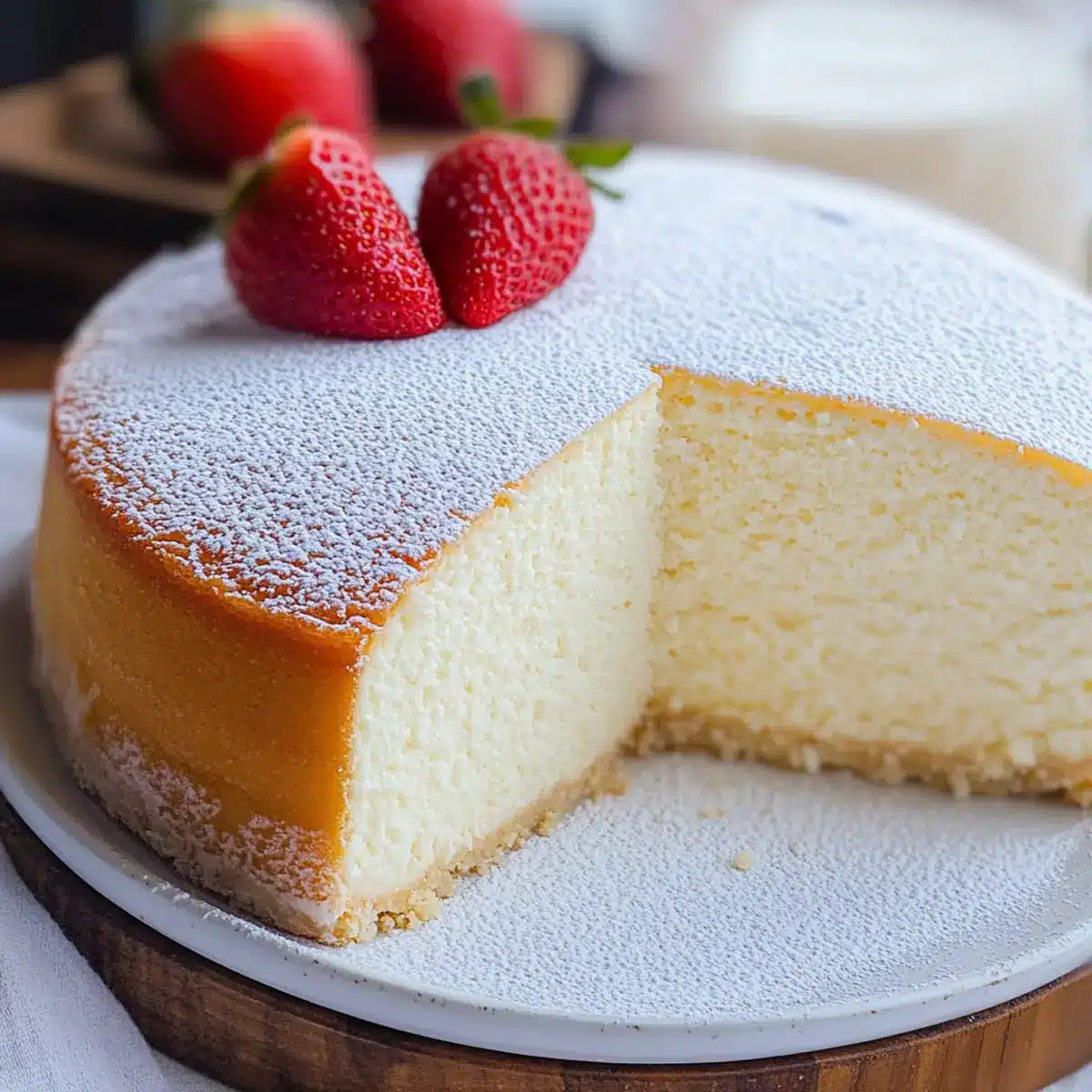
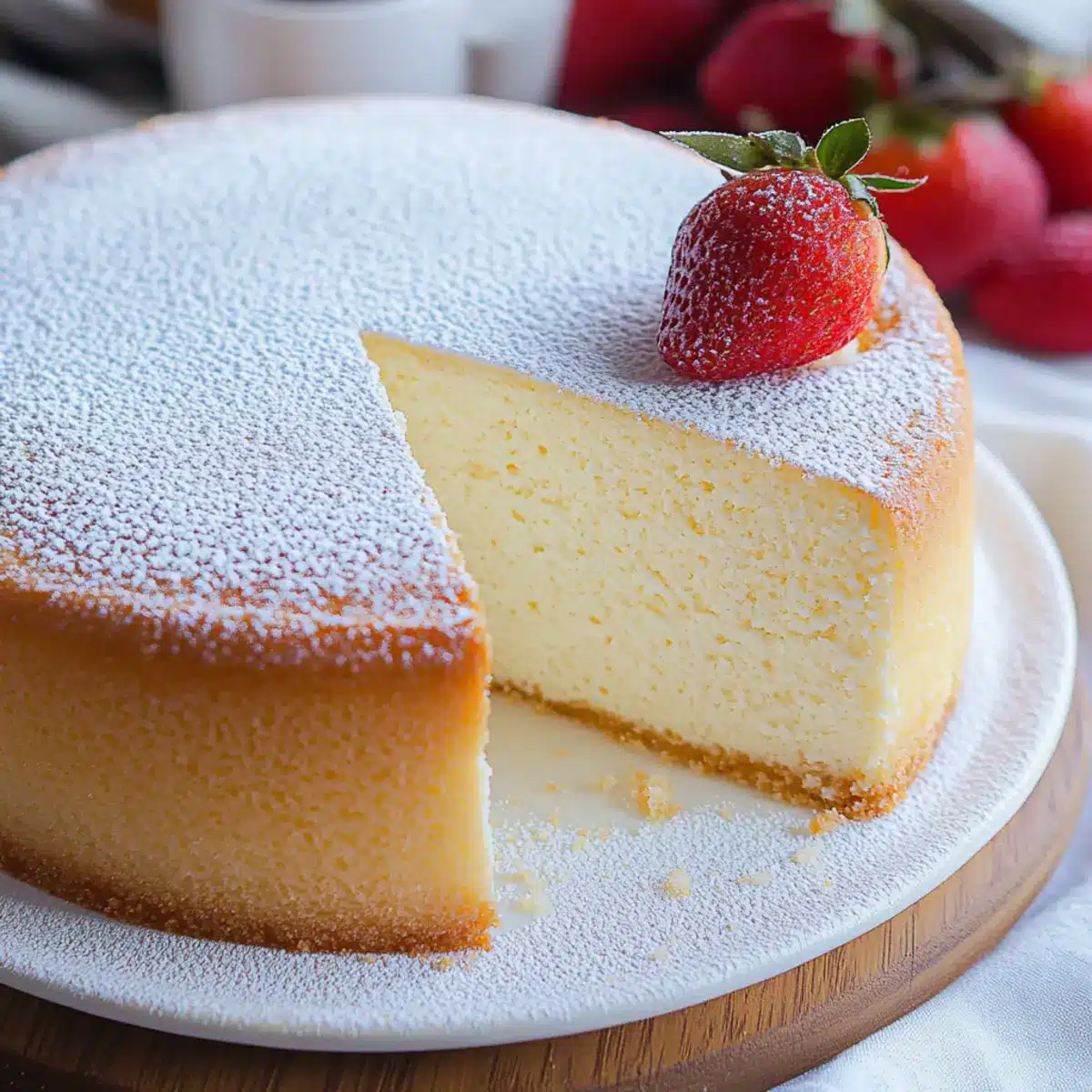
Once baked, allow the cheesecake to cool in the pan on a wire rack for about 10 minutes. Carefully invert it onto a plate, letting it cool completely on its side. Refrigerate the cheesecake for at least one hour before serving to enhance its texture further. For an elegant touch, consider dusting with powdered sugar or glazing with apricot jam just before serving.
Variations & Substitutions for Japanese Cheesecake
Feel free to explore these delightful twists on the classic Japanese cheesecake to suit your taste and dietary needs!
-
Richer Flavor: Increase the amount of cream cheese for a denser, creamier cheesecake experience. This will create an even more indulgent dessert.
-
Flavor Boost: Matcha Magic: Add 1-2 tablespoons of matcha powder for a beautiful green hue and a unique earthy flavor. Pairing it with whipped cream makes for a stunning presentation!
-
Alternative Sweeteners: Low-Sugar Sweetening: Substitute granulated sugar with a low-calorie sweetener like erythritol or stevia to lower sugar content while still maintaining that delicious sweetness.
-
Gluten-Free Option: Flour Swap: Replace cake flour with a gluten-free all-purpose blend mixed with cornstarch. This will allow everyone to enjoy this delightful dessert without worry!
-
Decadent Chocolate: Chocolate Lover’s Delight: Incorporate ¼ cup of cocoa powder into the batter for a rich chocolate version of this cheesecake. It transforms the creamy texture into a chocolate lover’s dream.
-
Citrus Variations: Mix in different citrus zests, such as orange or lime, to create a fresh twist. Each zest introduces its own flavors, giving you the flexibility to choose your favorite!
-
Creamy Coconut: For a tropical vibe, substitute half of the heavy cream with coconut cream. Top with toasted coconut flakes for an indulgent finish that transports you to paradise.
-
Serving Suggestions: Serve your cheesecake with fresh fruit, like strawberries or blueberries, or pair it with a dollop of whipped cream for an extra touch of comfort.
These variations not only enhance the flavor of your Japanese cheesecake, but they also open doors to new culinary adventures. Embrace your inner creative chef and let each delightful option inspire your next baking session! If you enjoyed this recipe, you’ll love my fluffy Japanese Souffle Pancakes, perfect for a cozy breakfast or dessert!
Make Ahead Options
These Japanese Cheesecake preparations are perfect for meal prep enthusiasts! You can whip up the cheesecake batter up to 24 hours in advance—just mix the cream cheese, butter, heavy cream, egg yolks, flour, lemon zest, and vanilla as usual. To keep it fresh, cover the bowl tightly and refrigerate. On the day you plan to serve it, simply prepare the meringue and gently fold it into the chilled batter before baking. Additionally, baked cheesecake can be refrigerated for up to 4 days or frozen for up to 2 months. Just ensure it’s well-wrapped to maintain quality. Enjoy impressive results that are just as delicious as fresh!
What to Serve with Light & Fluffy Japanese Cotton Cheesecake
There’s something magical about pairing the delicate notes of a Japanese cheesecake with complementary flavors and textures, enhancing your dessert experience.
- Fresh Berries: The tartness of strawberries and blueberries brightens the cake’s mild sweetness, offering a refreshing contrast.
- Whipped Cream: A dollop of lightly sweetened whipped cream adds a luxurious touch and airy texture that harmonizes beautifully with the cheesecake.
- Green Tea: Earthy matcha or a soothing cup of green tea accentuates the cake’s subtleness, creating a lovely palate balance with an Asian twist.
- Chocolate Ganache: Drizzling warm chocolate ganache adds richness, transforming your fluffy cheesecake into a decadent delight that’s sure to please chocolate lovers.
- Lemon Curd: This tangy spread amps up the lemony brightness of the cheesecake, bringing an extra zing that invigorates the senses.
- Apricot Glaze: A shiny apricot glaze not only enhances presentation but also brings a delightful fruity sweetness that pairs perfectly with the light texture of the cheesecake.
- Almond Biscotti: Crumbly almond biscotti add a crunchy contrast, making each bite of soft cheesecake even more enjoyable.
- Pineapple Salsa: A tropical twist with pineapple salsa provides a sweet and tangy flavor explosion that delights the taste buds.
- Mango Sorbet: Serving a scoop of mango sorbet alongside offers a refreshing, fruity flair that complements the cheesecake’s creaminess beautifully.
How to Store and Freeze Japanese Cheesecake
Fridge: Refrigerate leftover Japanese cheesecake for up to 4 days. Ensure it’s wrapped in plastic wrap or stored in an airtight container to maintain its fluffy texture and flavor.
Freezer: For longer storage, freeze the cheesecake for up to 2 months. Wrap slices tightly in plastic wrap and then in foil, or place them in an airtight container to prevent freezer burn.
Thawing: When ready to enjoy, transfer the cheesecake to the fridge to thaw overnight. Avoid thawing at room temperature to maintain its delicate structure.
Reheating: Japanese cheesecake is best served cold but can be lightly warmed in the microwave for a few seconds if you prefer a softer texture.
Expert Tips for Japanese Cheesecake
-
Egg Temperature: Use room temperature eggs for better emulsification; this helps create a light and airy texture in your Japanese cheesecake.
-
Gentle Folding: Be careful when folding the meringue into the batter; overmixing can deflate the airiness essential for that fluffy cheesecake quality.
-
Water Bath Importance: Never skip the water bath! It ensures gentle baking and prevents cracks, keeping your Japanese cheesecake perfectly smooth.
-
Cooling Method: Allowing the cheesecake to cool in the pan helps prevent sinking; inverting it too soon can cause it to collapse.
-
Serving Temperature: Serving the cheesecake chilled enhances its taste and texture, making every bite melt in your mouth.
Japanese Cheesecake Recipe FAQs
What type of eggs should I use for Japanese cheesecake?
Absolutely! For the best results, use large eggs (about 50g each). Room temperature eggs are preferable as they incorporate better into the batter, contributing to the airy, fluffy texture this Japanese cheesecake is known for.
How should I store my Japanese cheesecake after baking?
Refrigerate leftover Japanese cheesecake for up to 4 days. Make sure to wrap it in plastic wrap or place it in an airtight container to maintain its fresh and fluffy texture. This way, you can enjoy its delightful taste even after several days!
Can I freeze Japanese cheesecake?
Yes! You can freeze Japanese cheesecake for up to 2 months. Just be sure to wrap it tightly in plastic wrap and then in foil, or store it in an airtight container to keep it from developing freezer burn. When you’re ready to enjoy it, simply transfer the cheesecake to the fridge to thaw overnight.
What should I do if my cheesecake sinks after cooling?
If your Japanese cheesecake sinks, it may have been underbaked, or the meringue was overmixed. To prevent sinking in the future, always ensure the cheesecake is baked until a skewer comes out clean, and be gentle when folding the meringue. If it does sink, you can cover it with whipped cream or fresh fruit to add a touch of elegance!
Is this Japanese cheesecake suitable for people with allergies?
While this recipe includes common allergens such as eggs and dairy, I recommend substituting dairy-free cream cheese and coconut cream for those with dairy allergies for an alternative that still yields a similar texture. Additionally, be mindful of any specific egg allergies. Always consult ingredient labels to ensure safety for those with allergies.
How do I achieve the perfect texture for my Japanese cheesecake?
For that signature fluffy texture, it’s crucial to use a water bath while baking. This method ensures gentle, even cooking, preventing cracks and keeping your cheesecake moist. Also, take care not to overmix when incorporating the meringue; gentle folding is key to retaining the airiness!
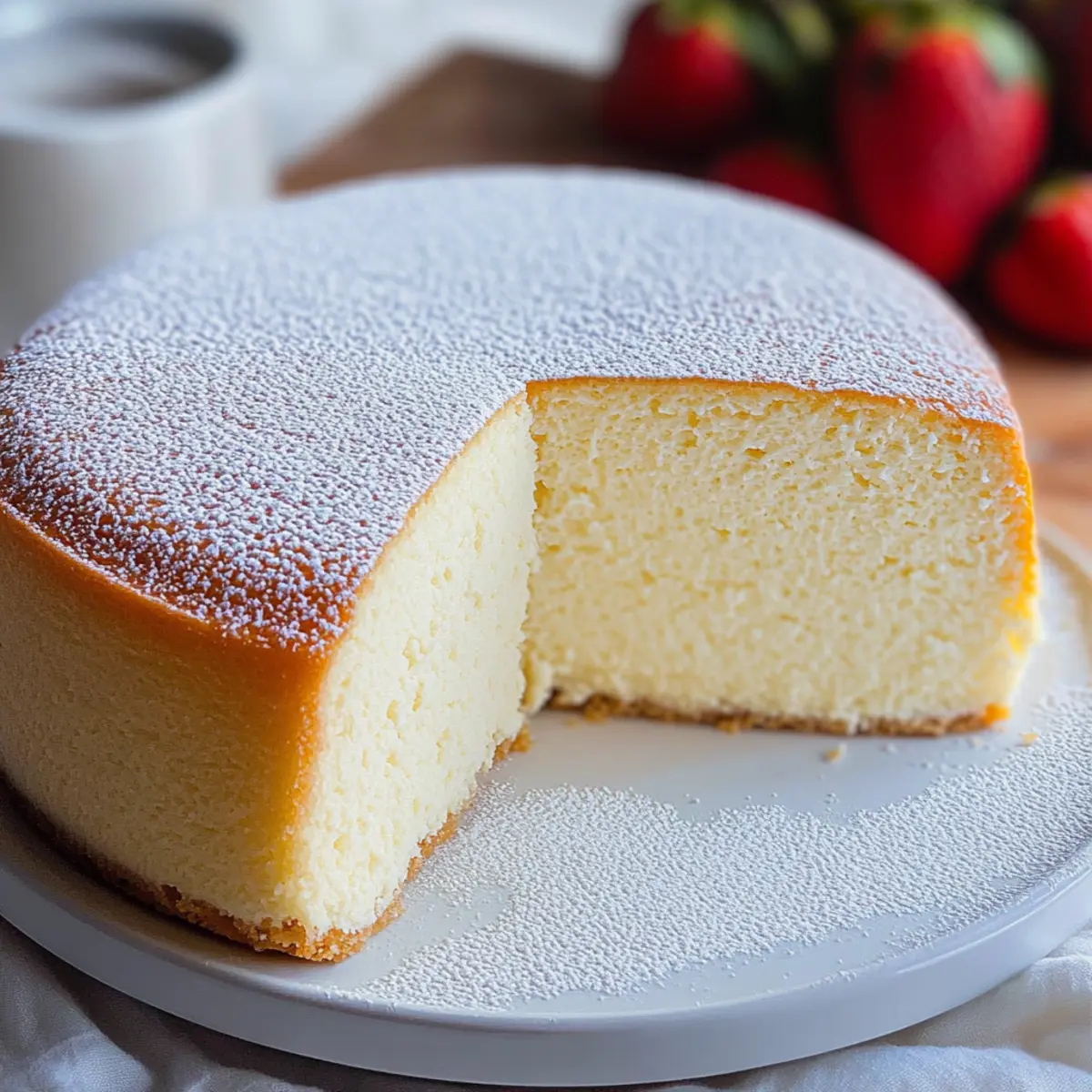
Fluffy Japanese Cheesecake: A Light, Dreamy Delight
Ingredients
Equipment
Method
- Preheat your oven to 300°F (150°C) and prepare an 8-inch round cake pan lined with parchment paper.
- In a heatproof bowl over simmering water, combine cream cheese, butter, and heavy cream until smooth.
- Remove from heat and whisk in egg yolks, cake flour, lemon zest, and vanilla extract until homogenous.
- In a clean bowl, whip egg whites with lemon juice until frothy, then add granulated sugar gradually and whip to medium-soft peaks.
- Gently fold meringue into batter in three additions, maintaining airiness.
- Pour batter into prepared pan, place in water bath, and bake for 80-90 minutes until golden brown.
- Allow to cool in the pan for 10 minutes, then invert onto a plate and refrigerate for at least one hour before serving.
Leave a Reply