
When I first tasted homemade lemon pâte de fruit, I was transported to a sun-soaked French market, where vibrant fruits and artisanal sweets come to life. These delightful jelly candies, with their bright tang and melt-in-your-mouth texture, are a sophisticated treat that feels far too fancy to prepare at home. Yet, here I am to share this simple, no-fuss recipe with you. Not only does this lemon pâte de fruit make an enchanting addition to any dessert table, but it also shines as a heartfelt gourmet gift—perfect for holidays or special occasions. With just a handful of natural ingredients, you can create a delectable candy that will impress friends and family, while steering clear of artificial flavors. Ready to elevate your sweet game? Let’s dive into the zesty world of making your own lemon pâte de fruit and perhaps explore a few fruity variations along the way! What flavor will you be inspired to try?

Why Make Lemon Pâte de Fruit?
Irresistible treat: These lemon pâte de fruit candies are expertly crafted to deliver a burst of authentic citrus flavor, creating a delightful treat that transports you straight to France.
Simple to prepare: With just a few natural ingredients and easy steps, you’ll master this gourmet confection without breaking a sweat.
Sweet gift idea: Packaged beautifully, these candies make a heartfelt gift for friends and family, perfect for holidays or special occasions.
Endless variations: Don’t stop at lemon! Experiment with raspberries, strawberries, or mango to create unique flavors and surprise your taste buds!
Healthier choice: Unlike store-bought varieties, these candies contain no preservatives or artificial ingredients, ensuring a fresh and delicious sweet treat.
Lemon Pâte de Fruit Ingredients
For the Candy Mixture
• Fresh Lemon Juice – Adds essential citrus flavor; use freshly squeezed for the best taste.
• Lemon Zest – Enhances aroma and intensifies the lemon flavor; make sure it comes from the same lemons for juicing.
• Granulated Sugar (100 g) – Helps the pectin to gel; you can also use it for coating later on if desired.
• Granulated Sugar (200 g) – Provides sweetness and helps create the perfect texture in the boiling mixture.
• Glucose Syrup – Sweetens and ensures the right consistency without crystallization; feel free to substitute with maple syrup or corn syrup.
• Yellow Pectin (7 g) – Essential for achieving that perfect gelling; keep in mind that substitutes may alter the texture.
To Boost Flavor
• Fresh Lemon Juice (1 tablespoon) – Added after cooking for an extra burst of citrus goodness.
For Coating
• Sanding Sugar – Provides a beautiful finish and prevents stickiness; granulated sugar works well as a substitute.
With these simple ingredients in hand, you’re just moments away from creating your own homemade lemon pâte de fruit — a truly delightful jelly candy experience!
Step‑by‑Step Instructions for Lemon Pâte de Fruit (Jelly Candies)
Step 1: Prepare Your Molds
Line a 14 cm (5.5 inches) frame or silicone molds with plastic wrap to ensure easy removal of your lemon pâte de fruit later. Make sure the wrap is smooth against the surfaces for a neat finish. Set your prepared molds aside while you start working on the candy mixture.
Step 2: Mix Pectin and Sugar
In a bowl, combine yellow pectin with 100 g of granulated sugar, stirring to mix thoroughly. This will help the pectin dissolve evenly when added to your warm mixture later on. Ensuring an even mix will promote a smooth jelly texture in your lemon pâte de fruit.
Step 3: Prepare Lemon Mixture
In a saucepan, combine fresh lemon juice, lemon zest, and glucose syrup, and warm the mixture gently over low heat until it reaches about 40°C (104°F). Stir occasionally to blend the ingredients nicely while allowing the citrus aroma to infuse the syrup, which will help create a vibrant flavor in your jelly candies.
Step 4: Incorporate the Pectin Mixture
Gradually add the pectin-sugar mixture to your warm lemon mixture while whisking continuously. This process will ensure your pectin dissolves without clumping, resulting in a smooth and cohesive mixture that will gel beautifully when cooked further. Keep whisking until the mixture is well combined, and no lumps remain.
Step 5: Bring to a Boil
Increase the heat and bring the mixture to a vigorous boil, stirring constantly to prevent sticking. Once boiling, gradually add the remaining 200 g of granulated sugar in batches while continuing to stir. This step is crucial for achieving the right consistency and sweetness in your lemon pâte de fruit, so keep an eye on your pot.
Step 6: Monitor Cooking Temperature
Continue boiling the mixture while stirring until it reaches 107°C (224°F) on a candy thermometer. You’ll notice the mixture thickening; it should bubble vigorously. Once it reaches the desired temperature, promptly remove the saucepan from the heat to avoid overcooking, which could affect the texture of your jelly candies.
Step 7: Add Extra Lemon Juice
Quickly stir in 1 tablespoon of fresh lemon juice into the hot mixture for an added burst of citrus flavor. This step enhances the taste of your lemon pâte de fruit, ensuring it is bright and zesty. Be careful as the mixture will still be hot; stir until thoroughly combined.
Step 8: Pour into Molds
Rapidly pour the hot mixture into your prepared mold or frame, spreading it evenly. Work swiftly, as the mixture will start to set quickly once removed from heat. Allow the lemon pâte de fruit to set at room temperature for at least 2 hours, though giving it a full night in the fridge will yield the best texture and firmness.
Step 9: Unmold and Coat
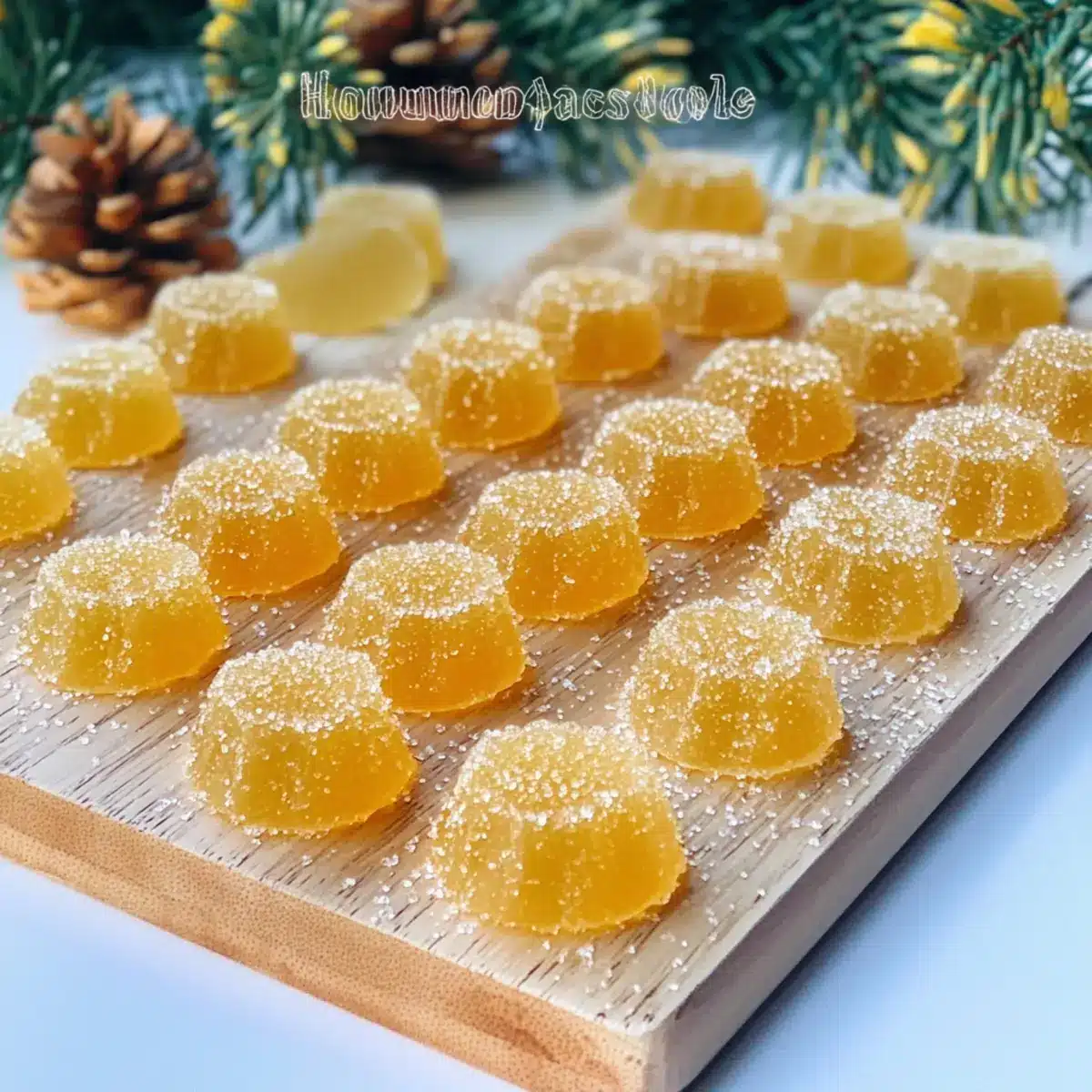
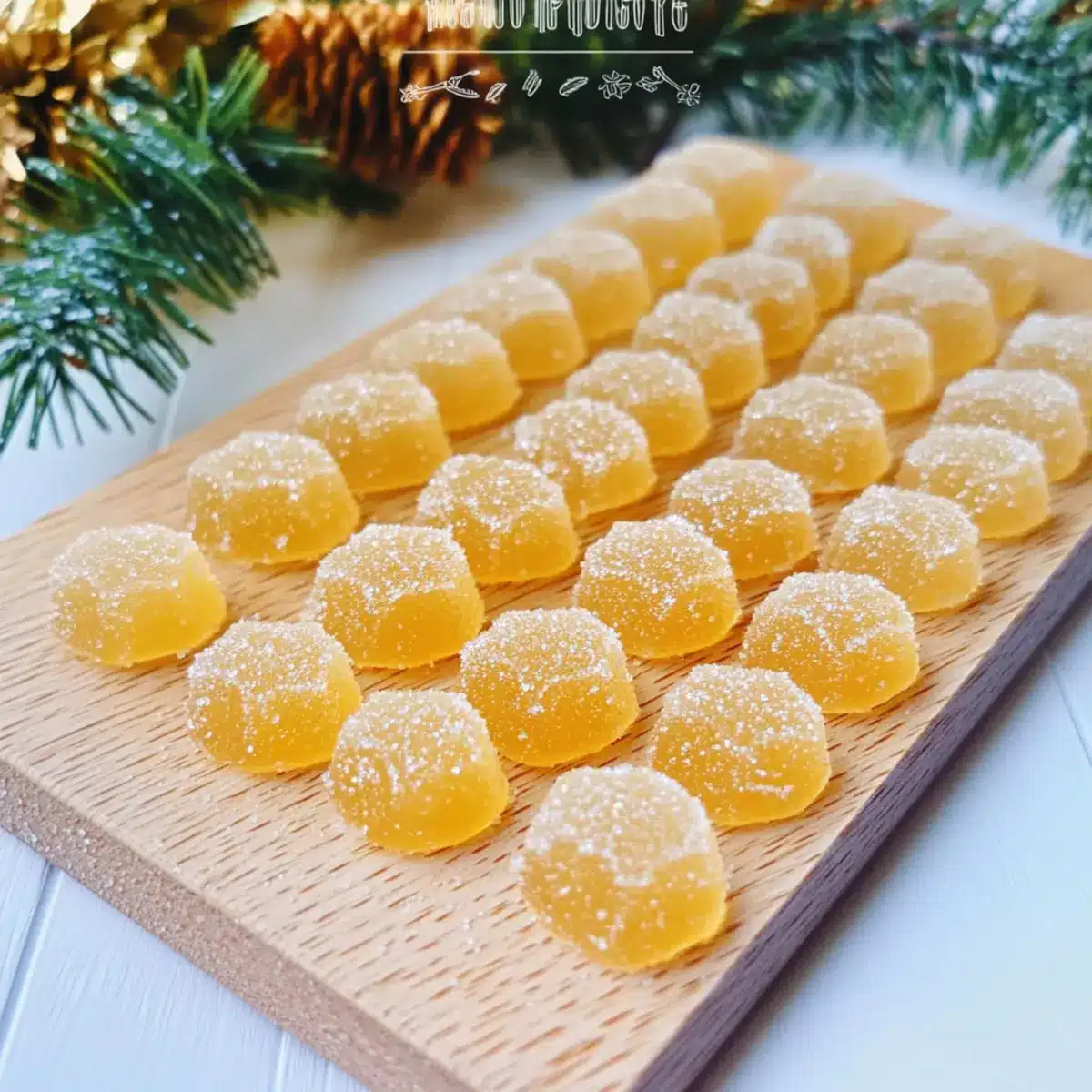
After the candy has set, carefully remove it from the mold and peel away the plastic wrap. Cut the solidified lemon pâte de fruit into cubes or desired shapes using a sharp knife. Roll each piece in sanding sugar to prevent stickiness and impart a beautiful finish, ensuring they look as delightful as they taste.
Step 10: Store Your Candies
Store the coated lemon pâte de fruit in an airtight container, separated by parchment paper to keep them from sticking together. They can be stored at room temperature, but if the weather is humid, allow them to air dry for a bit longer for optimal texture before storing. Your homemade lemon pâte de fruit is now ready to share and enjoy!

What to Serve with Homemade Lemon Pâte de Fruit?
The zesty brilliance of these delightful jelly candies pairs beautifully with a variety of accompaniments that enhance their flavor and elevate your overall experience.
-
Classic Tea: A fragrant Earl Grey or green tea complements the citrus notes, making for a perfect afternoon delight. The warmth of the tea softens the tartness and balances the sweetness beautifully.
-
Cheese Platter: Pair with a soft cheese like Brie or goat cheese for a delightful contrast of creamy and tangy textures. The richness of cheese enhances the fresh lemon flavor, creating a sophisticated snack.
-
Fresh Fruits: Slices of fresh strawberries or juicy raspberries add a burst of color and fresh sweetness that harmonizes with the lemony zing of the pâte de fruit. The juicy fruits brighten your palate for a refreshing touch.
-
Dark Chocolate: Serve alongside small squares of rich dark chocolate for an indulgent treat. The bitterness of the chocolate beautifully offsets the sweetness of the jelly candies, creating an exquisite balance.
-
Sparkling Wine: Enhance the experience with a glass of bubbly Champagne or Prosecco. The effervescence of sparkling wine refreshes the palate and complements the bright flavors of the lemon pâte de fruit.
-
Coffee: Pair these candies with a cup of freshly brewed coffee or an espresso. The robust notes of coffee contrast perfectly with the sweet, soft candies, making for a cozy, satisfying treat.
-
Mini Cheesecakes: Serve as a side to delicate mini cheesecakes for an elegant dessert platter. The smooth creaminess of cheesecake pairs beautifully with the tangy jelly, enhancing the dessert experience.
Whichever you choose, these pairings will elevate your homemade lemon pâte de fruit from a simple treat to a delightful experience!
Helpful Tricks for Lemon Pâte de Fruit
-
Flavor Boost: Add a splash of lemon juice after cooking for a vibrant taste. This enhances your lemon pâte de fruit’s tanginess and fresh flavor.
-
Avoiding Stickiness: If your candies get sticky due to humidity, gently heat them in a preheated oven at 30°C (86°F) before rolling in sugar to maintain their texture.
-
Quick Pouring: Work swiftly when transferring your mixture to molds, as it begins to set rapidly once off the heat. This ensures beautifully shaped jelly candies without any clumps.
-
Drying Tips: For best results, let your lemon pâte de fruit air dry in a cool, non-humid environment after cutting. This helps improve shelf life and texture before coating in sugar.
-
Stay Consistent: Use a candy thermometer to monitor the cooking temperature closely. This prevents overcooking and ensures your pâte de fruit achieves the perfect gel texture.
How to Store and Freeze Lemon Pâte de Fruit
Room Temperature: Store your lemon pâte de fruit in an airtight container at room temperature for up to 3 days. This keeps them soft while preventing excess moisture.
Fridge: For extended freshness, you can refrigerate the jelly candies, though they may become firmer. Keep them in an airtight container for up to 1 week.
Freezer: If you wish to store them longer, freeze the lemon pâte de fruit in a single layer separated by parchment paper. They can last up to 3 months; simply thaw in the fridge before enjoying.
Reheating: Not typically required, but if your candies become sticky, let them air dry at room temperature or briefly warm them in an oven set to 30°C (86°F) before serving.
Make Ahead Options
These homemade lemon pâte de fruit jelly candies are perfect for meal prep and can be made ahead of time to simplify your holiday baking or gifting! You can prepare the lemon mixture and pour it into molds up to 24 hours in advance; simply cover the molds and refrigerate for the best results. Once set, store the uncoated candies in an airtight container at room temperature. To finish, roll them in sanding sugar just before serving to maintain that delightful texture and prevent stickiness. This way, you’ll have a gourmet treat ready at a moment’s notice, always just as delicious as when freshly made!
Lemon Pâte de Fruit Variations
Feel free to experiment and make this recipe your own with these delightful twists that will tantalize your taste buds!
-
Berry Bliss: Use pureed raspberries or strawberries instead of lemon for a vibrant berry version. The rich color complements the tangy flavors beautifully.
-
Tropical Escape: Swap in fresh mango puree for a taste of the tropics. The sweetness of mango adds a wonderful contrast to the citrus notes.
-
Citrus Medley: Combine lemon juice with lime or orange to create a zesty citrus blend. This opens up a world of flavor possibilities!
-
Herbal Infusion: Add a sprig of fresh rosemary or thyme to the lemon mixture while heating. Remove it before pouring for a unique herbal twist that enhances the flavor.
-
Spicy Citrus Kick: Stir in a pinch of ground ginger or a dash of cayenne pepper for a delightful heat that pairs perfectly with the sweet and sour elements.
-
Nutty Delight: Incorporate finely chopped pistachios or almonds into the candy mixture for added texture and flavor. They provide a delightful crunch!
For more variations, you might also enjoy exploring the delightful flavors in my Greek Chicken Lemon recipe, which showcases how versatile citrus can be in both sweet and savory dishes.
-
Honey Sweetened: Instead of granulated sugar, use honey or agave syrup for a natural sweetness. This adds a different flavor profile that’s equally delicious!
-
Flavor Layering: After setting, dip half the candies in tempered chocolate for a gourmet treat. This combination elevates your homemade candies to a whole new level!
Happy experimenting! Each of these variations can open up new avenues of creativity in the kitchen, ensuring that your lemon pâte de fruit remains a beloved and customizable treat.
Lemon Pâte de Fruit Recipe FAQs
How do I know if my lemons are ripe for making pâte de fruit?
Look for lemons that are bright yellow, firm, and have a slight give when pressed. Avoid lemons with dark spots or shriveled skin, as they may be overripe or spoil.
What’s the best way to store lemon pâte de fruit?
Keep your lemon pâte de fruit in an airtight container at room temperature for up to 3 days for the best texture. If you prefer, you can refrigerate them for up to 1 week, but they may firm up a bit.
Can I freeze lemon pâte de fruit for later?
Absolutely! To freeze, arrange the candies in a single layer on a parchment-lined baking sheet and place them in the freezer. Once frozen solid, transfer them to a freezer-safe container separated with parchment paper. They will keep well for up to 3 months. Simply thaw in the fridge before enjoying them!
What should I do if my candies turn out sticky?
If your lemon pâte de fruit becomes sticky, briefly warm them in a preheated oven at 30°C (86°F) for a few minutes until slightly softened, then re-roll them in sanding sugar. Air-drying in a non-humid environment can also help improve texture.
Are there any dietary considerations when making lemon pâte de fruit?
Yes! While the recipe is generally safe for most diets, be mindful of any allergies related to citrus and be cautious with sugar intake if you’re managing dietary restrictions. These candies contain no preservatives or artificial ingredients, making them a healthier choice compared to commercial options.
What can I do if the texture isn’t right?
If your pâte de fruit doesn’t gel properly, ensure you’re using fresh pectin and have boiled it to the correct temperature (107°C / 224°F). It’s essential to whisk continuously while incorporating the sugar to avoid lumps. If it doesn’t set, you can reheat the mixture, add a bit more pectin, and bring it to the required temperature again.
Lemon Pâte de Fruit: Melt-in-Your-Mouth Jelly Candies
Ingredients
Equipment
Method
- Line a 14 cm frame or silicone molds with plastic wrap.
- Mix yellow pectin with 100 g of granulated sugar in a bowl.
- Combine fresh lemon juice, lemon zest, and glucose syrup in a saucepan; warm to 40°C.
- Gradually add the pectin-sugar mixture to the warm lemon mixture, whisking continuously.
- Bring the mixture to a vigorous boil, adding remaining 200 g of granulated sugar in batches.
- Boil until the mixture reaches 107°C on a candy thermometer, then remove from heat.
- Stir in 1 tablespoon of fresh lemon juice into the hot mixture.
- Rapidly pour the hot mixture into prepared molds, spreading evenly.
- Allow to set at room temperature for at least 2 hours, or overnight in the fridge.
- Carefully remove from mold and roll in sanding sugar.
- Store in an airtight container separated by parchment paper.
Leave a Reply